
 As many of you know, recently, Mama Shakira underwent emergency surgery for a life-threatening case of pyometra. Thankfully, thanks to the quick action of our animal care and veterinary teams, she is recovering under close observation here at Turpentine Creek Wildlife Refuge.
We wanted to take a moment to share more about what pyometra is, why it is so dangerous, and how conditions like this continue to impact rescued big cats in captivity.
What Is Pyometra?
Pyometra is a serious infection of the uterus that can quickly become life-threatening if left untreated. During the infection, the uterus fills with pus and bacteria, causing severe illness throughout the body.
This condition affects both domestic cats and wild cats, including lions and tigers. In many cases, it develops after years of hormonal cycling and reproductive stress.
For rescued big cats, especially those coming from breeding facilities, roadside zoos, or private ownership, the risk can be even higher.
Why Does It Happen?
Many female big cats rescued into sanctuary have spent years being bred repeatedly or living without proper veterinary care. Over time, this can lead to changes in the uterus that increase the risk of infection.
Some common risk factors include:
- Older age
- Repeated heat cycles without pregnancy
- Previous reproductive disease
- Poor long-term veterinary care
Signs Can Be Easy to Miss
One of the most dangerous things about pyometra is that the symptoms are often subtle at first. Big cats naturally hide pain and illness, making it difficult to recognize early warning signs.
- Low energy or lethargy
- Loss of appetite
- Vomiting
- Behavioral changes
- Vaginal discharge in some cases
Because these signs can look like many other illnesses, veterinary intervention is critical anytime an intact female big cat begins acting differently.
How Is Pyometra Diagnosed?
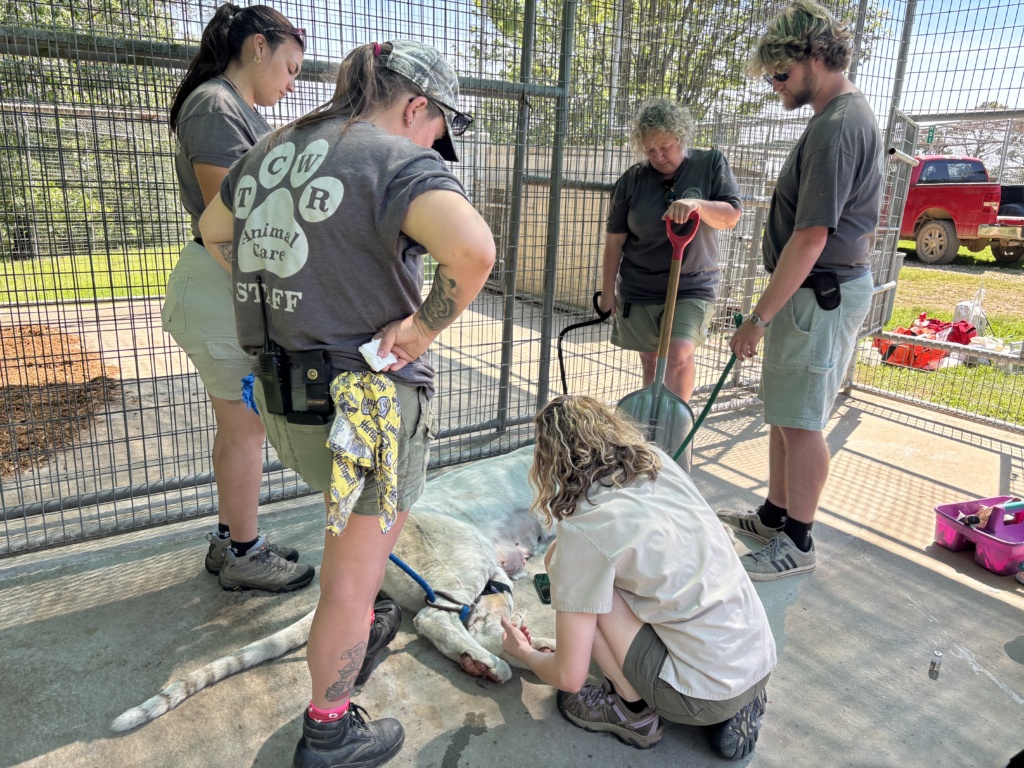
Diagnosing pyometra in big cats is complex and often requires anesthesia so veterinary teams can safely perform exams and baseline diagnostic tests.
Veterinarians may use:
- Bloodwork to check for severe infection and inflammation
- Ultrasound to examine the uterus
- Radiographs (x-rays) to support diagnosis
- Vaginal smears to confirm the presence of inflammatory discharge
In many cases, ultrasound is the clearest way to confirm pyometra.
Treatment Is an Emergency
Pyometra is considered a medical emergency. Without treatment, the infection can quickly spread throughout the body, leading to organ failure or death.
Treatment usually involves:
- Emergency spay surgery
- Intensive antibiotics
- Close monitoring and supportive care
For big cats, surgeries like these are never simple. They require experienced veterinary teams, specialized anesthesia protocols and surgical tools, and around-the-clock care before and after the procedure.
It is common practice for sanctuaries to consider birth control or permanently fixing their intact females in order to prevent this disease from occurring. However, the risks must be weighed for each individual animal, taking into consideration the stress of anesthesia and surgical time, to determine what the best course of action may be both for the physical and mental well being of that animal.
A Bigger Reminder About Captivity
Conditions like pyometra are often connected to years of exploitation, improper breeding, and lack of veterinary oversight.
Even after rescue, animals can continue to suffer from the long-term physical effects of captivity.
At Turpentine Creek Wildlife Refuge, our team works every day to monitor subtle changes, respond quickly to medical concerns, and provide lifelong care for animals who have already endured so much.
Why Your Support Matters
Pyometra is just one example of the complex medical conditions we see in rescued big cats.
Every emergency surgery, veterinary exam, medication, and recovery plan is part of our ongoing commitment to the animals who call the sanctuary home.
Because rescue is only the beginning.
Healing takes a lifetime.
Help us, help them – www.turpentinecreek.org/support/#donate