
Spring in the Ozarks is a time when the forests come alive. As warmer temperatures return and seasonal rains arrive, many reptiles and amphibians begin to emerge after the colder winter months. Around Eureka Springs, Arkansas, the region’s forests, limestone caves, springs, and clear streams provide ideal habitat for a wide variety of wildlife.
While many visitors come to see the rescued big cats at Turpentine Creek Wildlife Refuge, the surrounding Ozark Mountains also host fascinating reptiles and amphibians that play an important role in the local ecosystem.
Here are a few animals you might encounter while exploring the trails, creeks, and forests around Eureka Springs this spring.
Snakes of the Ozarks
Arkansas is home to nearly 40 native snake species, many of which live throughout the Ozark region. Most snakes are harmless and play an important role in controlling rodent and insect populations.
Common non-venomous snakes found in northwest Arkansas include:
- Speckled kingsnake
- Western rat snake
- Eastern hognose snake
- Rough earth snake
- Prairie kingsnake
- Midland water snake
A few venomous species also live in the Ozarks, including the eastern copperhead, timber rattlesnake, and western pygmy rattlesnake. These snakes typically avoid humans, and bites are uncommon.
Lizards Basking in the Spring Sun
The rocky hillsides and sunny forest edges around Eureka Springs provide ideal habitat for several species of lizards. Visitors often see them basking on rocks, logs, or fence posts to warm themselves.
Common Ozark lizards include:
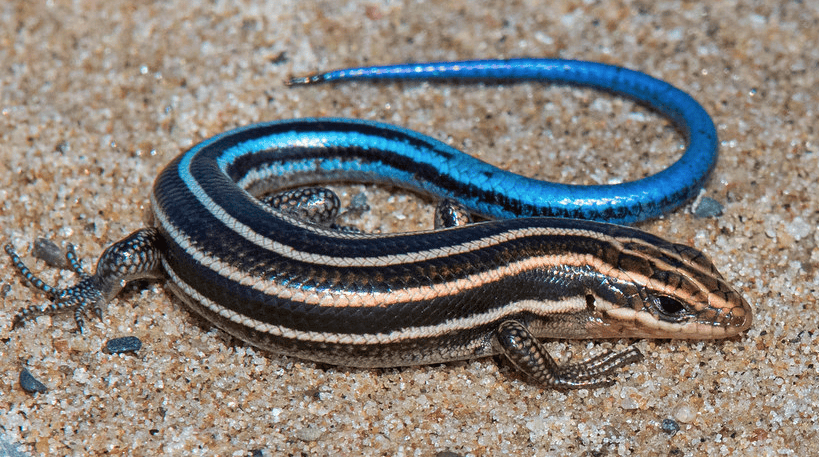
- Five-lined skink
- Broad-headed skink
- Prairie skink
- Eastern fence lizard
- Western slender glass lizard (a legless lizard often mistaken for a snake)
Skinks are among the most frequently seen reptiles in Arkansas due to their adaptability and quick movements.
Turtles of Ozark Streams and Forests
The creeks, lakes, and wetlands around Eureka Springs provide homes for several turtle species.
Species commonly found in the region include:
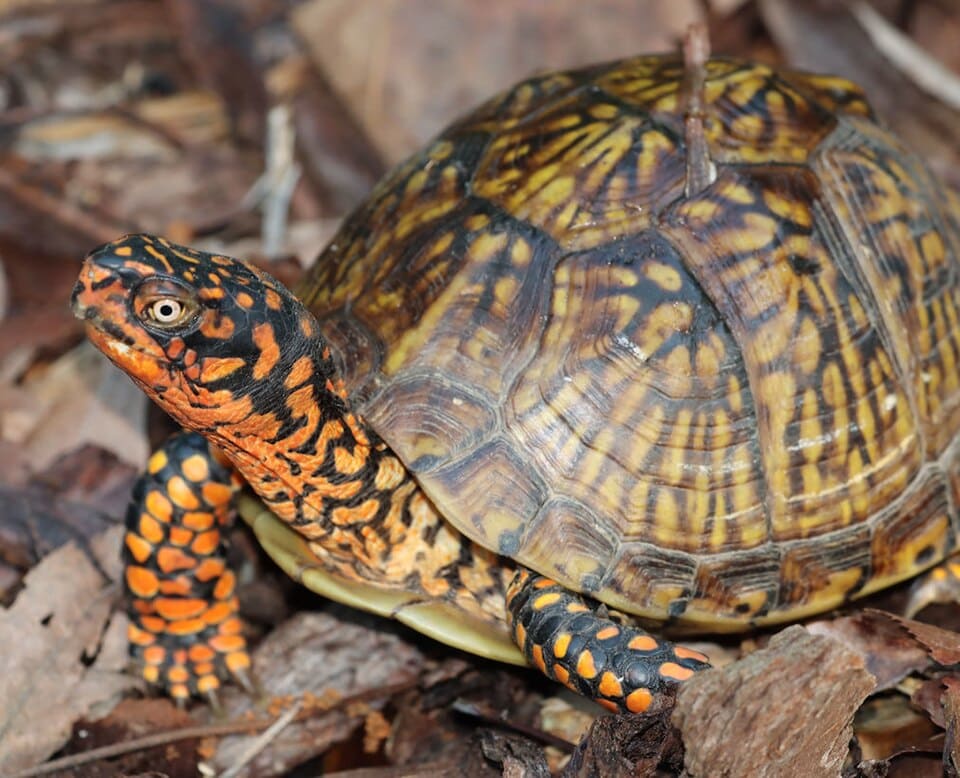
- Three-toed box turtle
- Common snapping turtle
- Painted turtle
- Map turtles
- Razor-backed musk turtle
The three-toed box turtle is especially common in Ozark forests and is sometimes seen crossing trails or roads after rainfall.
Salamanders: Hidden Treasures of the Ozarks
Many people are surprised to learn that the Ozark Mountains are considered a hotspot for salamander diversity. These amphibians thrive in the cool, moist environments created by the region’s forests, caves, and springs.
Salamanders found in northwest Arkansas include:
- Western grotto salamander
- Southern grotto salamander
- Ringed salamander
- Long-tailed salamander
- Spotted salamander
Most salamanders spend their time hidden beneath rocks, logs, or leaf litter near streams and springs. Because they breathe through their skin, they rely on clean water and healthy habitats to survive.
You can explore salamander species through the global amphibian research database AmphibiaWeb:
🔗 https://amphibiaweb.org/
Frogs and Toads: The Sounds of Spring
One of the most recognizable signs of spring in the Ozarks is the chorus of frogs calling from ponds and wetlands after sunset.
Species commonly heard or seen in the region include:
- American bullfrog
- Green frog
- Southern leopard frog
- Gray treefrog
- Spring peeper
Toads are also common in gardens, forests, and near streams around Eureka Springs. Local species include:
- American toad
- Fowler’s toad
- Woodhouse’s toad
These amphibians play an important role by controlling insect populations and supporting healthy ecosystems.

Exploring Nature Around Eureka Springs
The Ozark Mountains provide a unique combination of forests, caves, rocky bluffs, and freshwater ecosystems, making the region one of the most diverse wildlife habitats in the central United States. Reptiles and amphibians are an important part of these ecosystems, helping control pests and serving as food for birds and mammals.
If you’re planning a spring visit to Eureka Springs, take time to explore the outdoors and discover the incredible wildlife that calls the Ozarks home. And while you’re in the area, consider visiting Turpentine Creek Wildlife Refuge to meet the rescued wild cats and bears who live safely in expansive natural habitats at the sanctuary. Educational tram tours are available seven days a week, from 9 am to 4 pm.
Spring is the perfect time to experience both the wild beauty of the Ozarks and the inspiring stories of rescued wildlife. 🌿
Encyclopedia of Arkansas:
🔗 https://encyclopediaofarkansas.net/entries/reptiles-4509/