

A lot can be learned about an animal just by studying its skull. The bones’ size, shape, and structure can reveal an animal’s diet, strengths, and even its role in the ecosystem. Imagine you’re holding a mammal skull but don’t know which species it belongs to—by recognizing a few basic features, you can start piecing together how that animal lived and survived in the wild.
The Skull’s Function
The skull does far more than give shape to the head. It is a shield for the brain—one of the most important and delicate organs in any animal’s body. The skull also protects the eyes and provides a critical surface area where muscles, especially those used for chewing, can anchor. In short, the skull is both armor and a foundation for survival.
Eye Placement and Vision
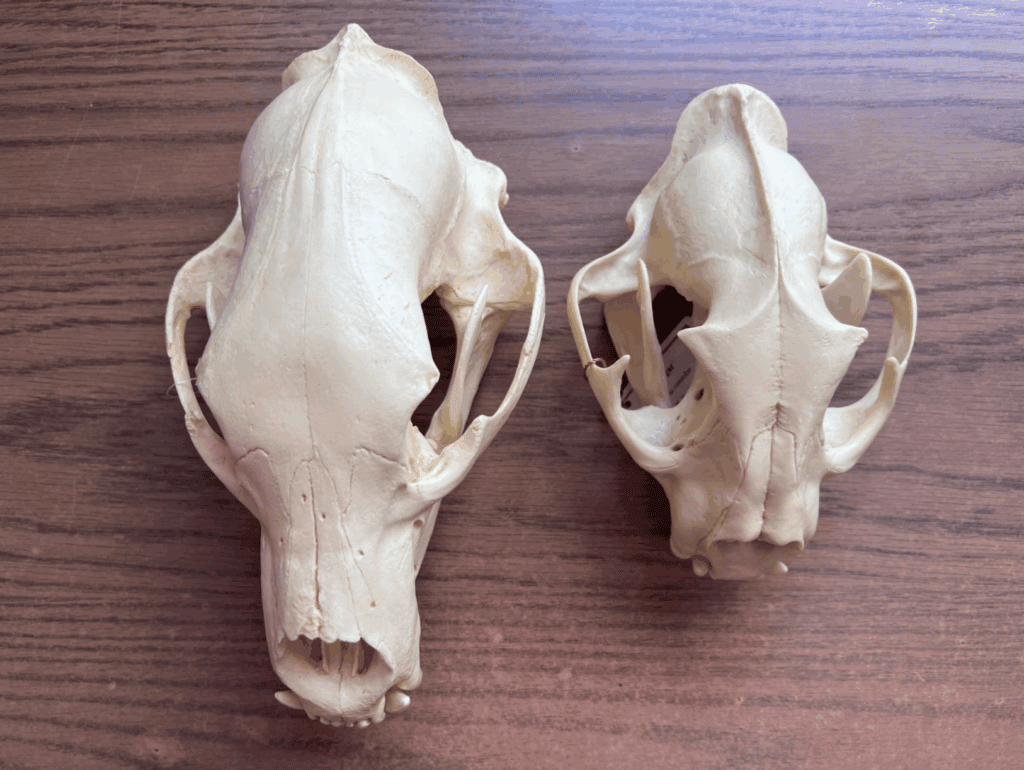
The location and size of the eye sockets, called orbits, can tell us a lot about an animal’s place in the food chain. Animals with relatively large orbits tend to have larger eyes, which give them better vision—often in low light conditions. Carnivores, for example, have more forward-facing eyes. This provides depth perception, which is essential for stalking and hunting prey. Herbivores, on the other hand, typically have eyes on the sides of their heads, giving them a wide field of view to watch for approaching predators.
The Sagittal Crest
Along the top of some skulls is a ridge of bone called the sagittal crest. This structure provides extra surface area for jaw muscles to attach, translating into bite strength. A prominent sagittal crest usually means the animal had a powerful bite. Carnivores, who rely on strong jaws to catch and consume prey, often have more pronounced crests than herbivores. Even among carnivores, comparing the size of the sagittal crest can give scientists clues about which species has or did have the strongest jaws.
The Nasal Cavity
The nasal cavity is another useful feature for identifying an animal’s strengths. A large, complex cavity usually means an animal relies heavily on its sense of smell. For instance, a bear’s nasal cavity is long and intricate, giving it one of the best senses of smell in the animal kingdom. In contrast, a cougar’s nasal structure is shorter and simpler, reflecting its greater dependence on sight and stealth for hunting.
Teeth Tell the Story
Perhaps the easiest clue of all lies in an animal’s teeth. Different types of teeth serve different purposes:
- Incisors cut
- Canines tear and hold
- Premolars crush and chew
- Molars grind and crush
By looking at the combination of these teeth, you can quickly determine what an animal ate. Carnivores have sharp canines and few molars, while herbivores often lack canines and rely heavily on molars for grinding plants. Omnivores, like humans, have a balanced mix of all four types.
Putting it All Together
These are just a few features scientists use to understand animals better when examining skulls. While there are countless other details to explore, even these basics can give you an incredible window into how a species once lived, hunted, or defended itself. Each skull is like a puzzle piece that helps us understand the bigger picture of life in the wild.