
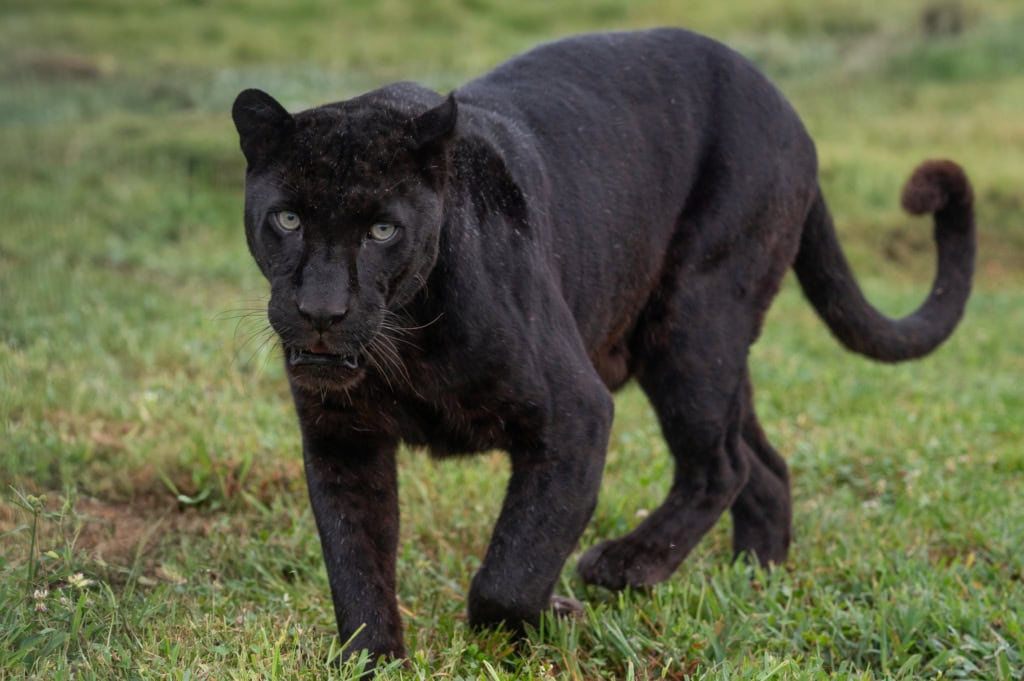
Melanism—the genetic trait that produces excess dark pigment in an animal’s fur—is documented in at least 11 species of wild cats. While it is rare overall, the frequency of melanism varies widely depending on the species and environment. Some cats, such as bobcats and servals, exhibit melanism in scattered populations, while others, including leopards and jaguars, have significantly higher rates of melanistic individuals.
Bobcats: Shadows in the Swamp
Bobcats (Lynx rufus) are widespread across North America, but melanistic bobcats are extraordinarily uncommon. Most records come from Florida, where dense swamps and shaded wetlands create conditions where darker coats may offer a camouflage advantage. A 2024 study in the Greater Everglades found melanistic bobcats represented less than 0.5% of all camera-trap images (Branney et al., 2024, Ecology and Evolution). Even rarer are sightings farther north, such as in New Brunswick, Canada, making those individuals outliers for the species (Fox & Hardie, 2012, The Canadian Field-Naturalist). These scattered sightings remind us that even within a single species, genetics can produce surprising adaptations.
Servals: Black Cats of Africa
Servals (Leptailurus serval) are typically golden-coated with bold spots; however, melanism has been documented in several parts of Africa. Historically, these black servals were believed to occur mostly in high-altitude forests, like the Aberdare Mountains and Mount Kenya, where cooler temperatures and dense cover made dark coats advantageous (Sheidrick Wildlife Trust, 2022).
Surprisingly, researchers have recently observed high rates of melanism in unexpected places. In Tsavo, Kenya, nearly half of all recorded servals between 2011 and 2016 were melanistic (Sheidrick Wildlife Trust, 2022). This discovery challenged long-held assumptions and suggested that factors beyond camouflage—such as genetics or local ecological pressures—may influence melanism in smaller cats.
Leopards and Jaguars: Masters of the Shadows
Compared to smaller cats, melanism is far more prominent in big cats like leopards (Panthera pardus) and jaguars (Panthera onca).
- Leopards: In certain regions, such as Southeast Asia and tropical rainforests, studies estimate that up to 50% of leopards may be melanistic (Eizirik et al., 2003, Current Biology). The trait likely persists because dense, shadowy habitats strongly favor darker coats, which provide stealth for ambush hunting.
- Jaguars: Melanistic jaguars are particularly common in the Amazon Basin, where their dark coats enable them to blend into the rainforest understory. Genetic research has identified specific mutations in the MC1R gene responsible for jaguars’ melanism (Schneider et al., 2012, Heredity).
Why is melanism more frequent in larger cats?
Scientists suggest that big cats’ ecological role amplifies the advantages of a dark coat. Leopards and jaguars are apex predators that rely heavily on stealth in dimly lit environments. In contrast, smaller cats like bobcats or servals often hunt in more open or varied landscapes, where a black coat might reduce camouflage. Additionally, the genetic mutations that cause melanism appear more stable and widespread in big cats, helping the trait persist at higher frequencies across populations.
TCWR’s Black Leopards: Vada, Zambo, and Spyke
Melanism may be rare in the wild, but it has left an unforgettable mark on Turpentine Creek Wildlife Refuge (TCWR). Over the years, three iconic black leopards—Vada, Zambo, and Spyke—captured hearts with their dark coats and even brighter spirits. Though all three have passed away, their stories continue to inspire and educate future generations about the wonder of wild black cats.
- Vada came from Montana after suffering neglect and cruelty, his teeth filed down by a former owner. With dental care and sanctuary life, he finally found peace and lived with dignity at TCWR.
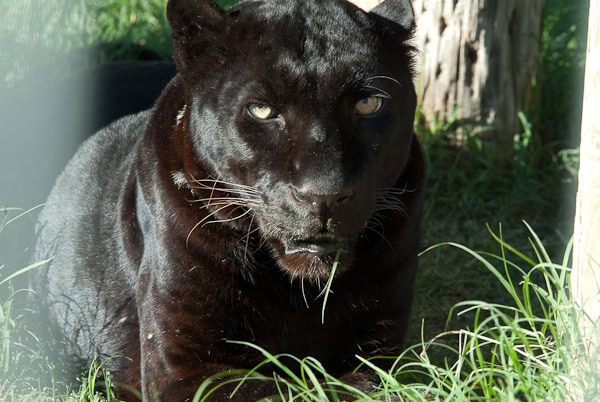
Vada - Zambo was rescued from a failing private zoo in New York. Calm and steady, he became the father of Spyke after arriving with a pregnant female leopard, Santania. Although TCWR is a strictly no-breeding facility, Spyke’s birth resulted from Santania’s pregnancy before rescue.
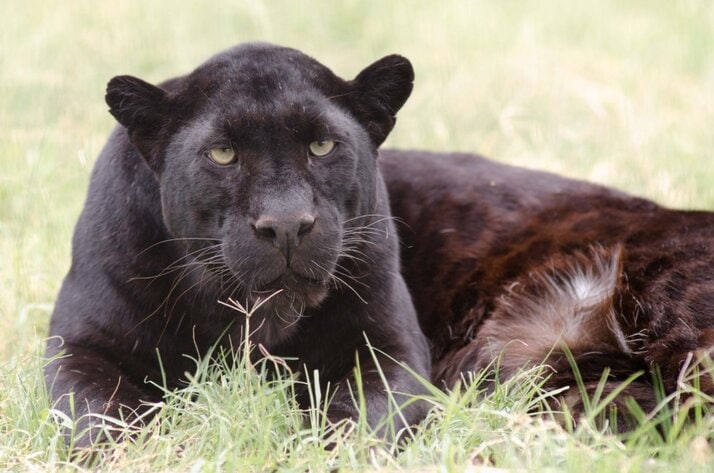
- Spyke, born at TCWR in 2008, became one of the Refuge’s most beloved residents. His coat gleamed black, but in the right light his hidden rosettes appeared, teaching visitors about the science of melanism. Spyke loved climbing, stalking, and training with his keepers, embodying the agility and intelligence of his species.
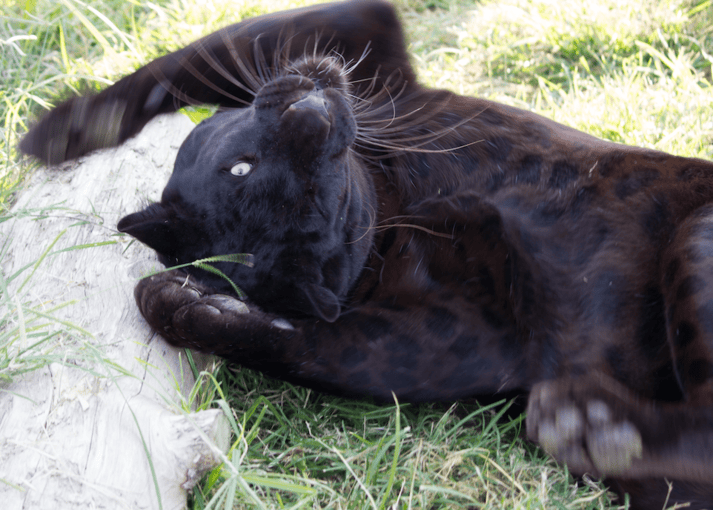
Vada, Zambo, and Spyke left lasting impressions on the people who visited the Refuge and on those who cared for them; their legacy continues to live on. Today, TCWR is still home to two black cats: Bagheera, a younger jaguar who has quickly become a visitor favorite, and Axle, a black leopard whose perseverance through hardship inspires all who meet him.
References:
Branney, A. B., Labisky, J. L., Smith, B. J., Onorato, D. P., & Hostetler, J. A. (2024). Photographic documentation of melanism in bobcats (Lynx rufus) in the Greater Everglades Ecosystem. Ecology and Evolution, 14(3), e10754. https://doi.org/10.1002/ece3.10754
Eizirik, E., Yuhki, N., Johnson, W. E., Menotti-Raymond, M., Hannah, S. S., & O’Brien, S. J. (2003). Molecular genetics and evolution of melanism in the cat family. Current Biology, 13(5), 448–453. https://doi.org/10.1016/S0960-9822(03)00128-3
Fox, J. L., & Hardie, R. (2012). A melanistic bobcat (Lynx rufus) from New Brunswick. The Canadian Field-Naturalist, 126(1), 21–23. https://doi.org/10.22621/cfn.v126i1.1299