
When an animal arrives at Turpentine Creek Wildlife Refuge, they bring more than their physical needs with them.
Many of the animals who call TCWR home today have survived neglect, exploitation, inadequate housing, improper nutrition, and years of instability. Some were used in cub-petting operations. Others were bred for profit, kept in backyard cages, or confined in roadside zoos. Nearly all arrive carrying the lasting effects of their past experiences.
For our Animal Care Team, providing food, veterinary care, and a safe habitat is only part of the journey. One of the most important—and often overlooked—aspects of sanctuary care is building trust.
That is where our Behavioral Management Program comes in.
Behavioral management programs similar to those used at Turpentine Creek Wildlife Refuge are standard practice in accredited zoological institutions throughout North America, helping caregivers provide safer, less stressful veterinary and husbandry care while improving overall animal welfare. The Association of Zoos and Aquariums (AZA) recognizes behavioral husbandry, enrichment, and positive reinforcement training as important components of comprehensive animal care programs.
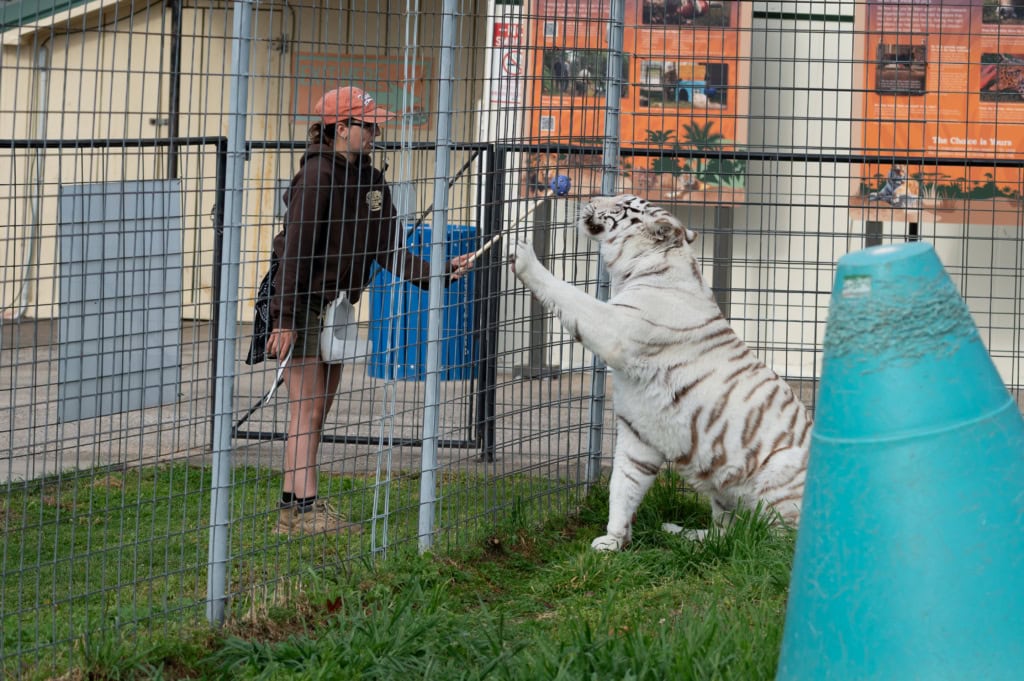
From Sanctuary to Industry Leader: Building a Behavioral Management Program
For decades, our internship program has helped prepare future animal care professionals for careers throughout the zoological community. Many former TCWR interns have gone on to work at AZA-accredited zoos, aquariums, sanctuaries, and wildlife facilities across North America.
As those graduates built successful careers within the husbandry field, they also helped create a valuable professional network that continues to benefit the animals in our care today. Through these relationships, TCWR has been able to collaborate with experienced animal care professionals, exchange best practices, and stay informed about advancements in animal welfare and husbandry techniques.
In 2015, that network helped lay the foundation for one of the Refuge’s most impactful animal welfare initiatives.
That year, Turpentine Creek Wildlife Refuge hosted a Behavioral Management Training Workshop led by five animal advisors from AZA-accredited zoological facilities. Drawing on decades of collective experience working with large carnivores and other exotic species, these professionals introduced TCWR staff to operant conditioning, behavioral husbandry techniques, and positive reinforcement training methods that had already proven successful in accredited zoological institutions across the country.
What began as a workshop quickly evolved into a structured Behavioral Management Program tailored specifically to the unique needs of rescued exotic cats.
Training Is Healthcare
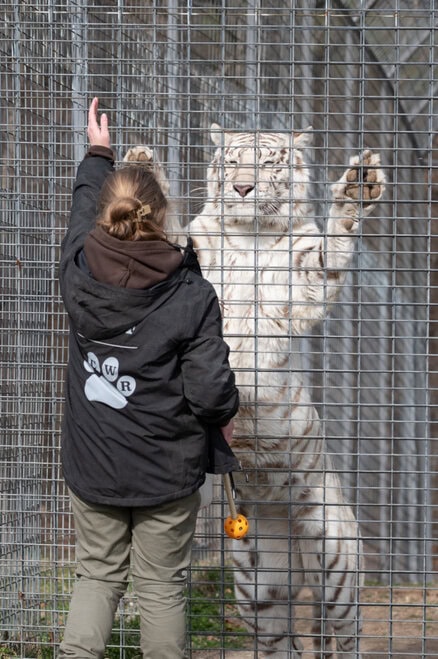
One of the biggest misconceptions about animal training is that it exists for entertainment. At TCWR, behavioral training serves an entirely different purpose.
It is healthcare.
Behavioral husbandry programs emphasize that positive reinforcement training can reduce stress associated with veterinary procedures, routine husbandry, and medical examinations while increasing an animal’s ability to voluntarily participate in its own care.
By teaching simple behaviors, caregivers can perform visual health assessments and prepare animals for medical procedures that would otherwise be far more stressful.
Tanya and Kizmin, two white tigers at TCWR, demonstrate how behavioral management directly improves animal care. Through years of positive reinforcement training, both tigers have learned a behavior called “side,” in which they voluntarily position a hip against the mesh and hold still for examination. This behavior allows caregivers to closely assess body condition, monitor for injuries or abnormalities, and even administer vaccinations with significantly less stress. By participating voluntarily in their own healthcare, Tanya and Kizmin help reduce the need for sedation while allowing staff to perform more thorough routine health checks—an outcome made possible through patience, consistency, and trust.
The Science Behind Positive Reinforcement
Modern behavioral management programs are built on decades of research in animal behavior and welfare science.
Positive reinforcement training works by rewarding desired behaviors, increasing the likelihood that those behaviors will occur again in the future. In zoological settings, rewards are often food-based and paired with a bridge signal, such as a whistle, that tells the animal they have successfully completed the requested behavior.
Research has consistently shown that positive reinforcement training can:
- Reduce stress associated with medical procedures
- Improve cooperation during husbandry activities
- Increase opportunities for mental stimulation
- Enhance the relationship between animals and caregivers
- Give animals greater choice and control over their environment
A comprehensive review published in the journal Animals found that modern zoo training programs improve welfare outcomes while allowing animals to participate voluntarily in husbandry and veterinary care.
Another review published in Animal Welfare found that training can function as enrichment by providing animals with opportunities for learning, choice, and positive interaction with their environment.
Research in Zoo Biology has also emphasized the importance of evidence-based animal welfare practices in modern zoological management.
These studies support what caregivers observe every day: animals often become more confident, engaged, and willing participants in their own care when training is conducted using positive reinforcement methods.
Life Long Care and Impact
Over the years, the program has continued to grow through collaboration with animal care professionals, ongoing staff education, and lessons learned from the individual animals themselves. Today, behavioral management is an essential component of daily care at Turpentine Creek Wildlife Refuge, helping caregivers build trust with animals who may have spent years learning not to trust people at all. Beyond our own sanctuary, TCWR continues to support animal welfare across the field by hosting workshops, serving as guest speakers, and collaborating with fellow animal care professionals to share knowledge and advance best practices in behavioral management and exotic animal care.
Learn more about AZA’s approach to behavior, enrichment, and training here: