
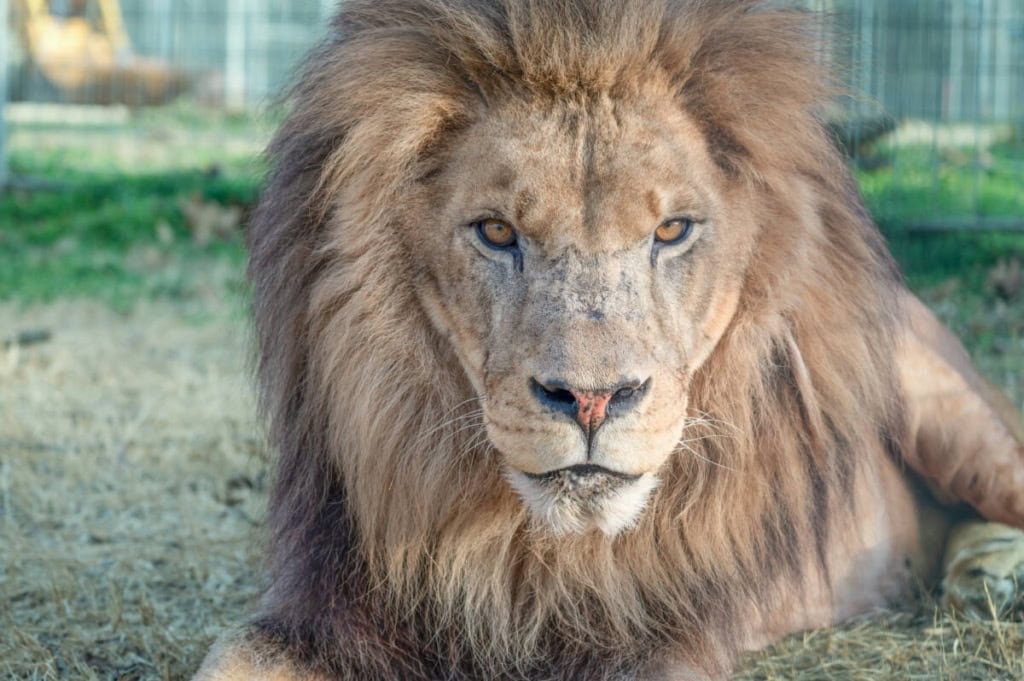
Every year on August 10, World Lion Day shines a spotlight on one of the world’s most iconic animals. Lions have inspired cultures for thousands of years, appearing in art, literature, mythology, and national symbols across the globe. Yet behind their powerful image lies a troubling reality.
Wild lion populations have declined dramatically over the last century, and thousands more lions spend their lives in captivity—not in accredited sanctuaries, but in breeding facilities, roadside zoos, and private ownership where their welfare often comes second to entertainment or profit.
At Turpentine Creek Wildlife Refuge, World Lion Day is not a celebration of lions in captivity. It is a reminder of why they belong in the wild—and why accredited sanctuaries exist for those who can never return.
The King of Beasts Is Losing Its Kingdom
A century ago, more than 200,000 lions roamed Africa, the Middle East, and parts of Europe and Asia. Today, scientists estimate that only around 20,000 to 25,000 wild lions remain, occupying less than 10% of their historic range.
Habitat loss continues to fragment the landscapes lions need to survive. Expanding agriculture, development, and human populations increasingly place lions into conflict with people. Livestock predation often results in retaliatory killings, while poaching threatens both lions directly and the prey species they depend upon.
The African lion is now listed as Vulnerable by the International Union for Conservation of Nature (IUCN), while some regional populations are considered Endangered.
Their greatest challenge isn’t that lions have forgotten how to survive.
It’s that the world around them has changed.
The Hidden Crisis: Lions in Captivity
While wild lions continue to disappear, thousands of captive lions are born every year.
Many are bred for commercial purposes—roadside attractions, cub-petting operations, photo opportunities, entertainment, or the exotic pet trade. Once they grow too large to safely handle, many become difficult to place.
Contrary to popular belief, breeding lions in captivity does not help conserve wild populations.
Most captive lions have no documented conservation value, cannot be released into the wild, and often lack the genetics or life skills necessary for reintroduction. Instead, they become part of a cycle of commercial breeding that creates more lions than there are responsible homes to care for.
At accredited sanctuaries like Turpentine Creek Wildlife Refuge, we do not breed lions.
Our mission begins where that cycle ends.
Why Captive Lions Cannot Simply Be “Released”
One of the questions we hear most often is:
“Why can’t you just let them go?”
It’s an understandable question—but the answer is heartbreaking.
Most lions rescued by sanctuaries were born under human care. They never learned to hunt, establish territories, or navigate complex pride dynamics from wild lions. Many have been improperly socialized, declawed, physically altered, or suffer lifelong medical conditions caused by poor nutrition, inbreeding, or inadequate veterinary care.
Some were removed from their mothers too early. Others spent years confined to concrete cages.
Releasing these lions would almost certainly be a death sentence—for them and potentially for wild lion populations.
Instead, accredited sanctuaries provide something different:
A lifetime of expert veterinary care, nutritious diets, behavioral enrichment, spacious natural habitats, and, perhaps most importantly, the opportunity to make choices.
A Different Kind of Life
At Turpentine Creek Wildlife Refuge, every lion has a different story.
Some arrived after law enforcement seizures.
Others came from failed roadside zoos, private ownership, or facilities that could no longer provide adequate care.
Several survived severe neglect. Others continue to receive lifelong treatment for conditions such as metabolic bone disease—damage caused during development that cannot be reversed but can be compassionately managed.
While we cannot erase what happened before they arrived, we can ensure the rest of their lives look very different.
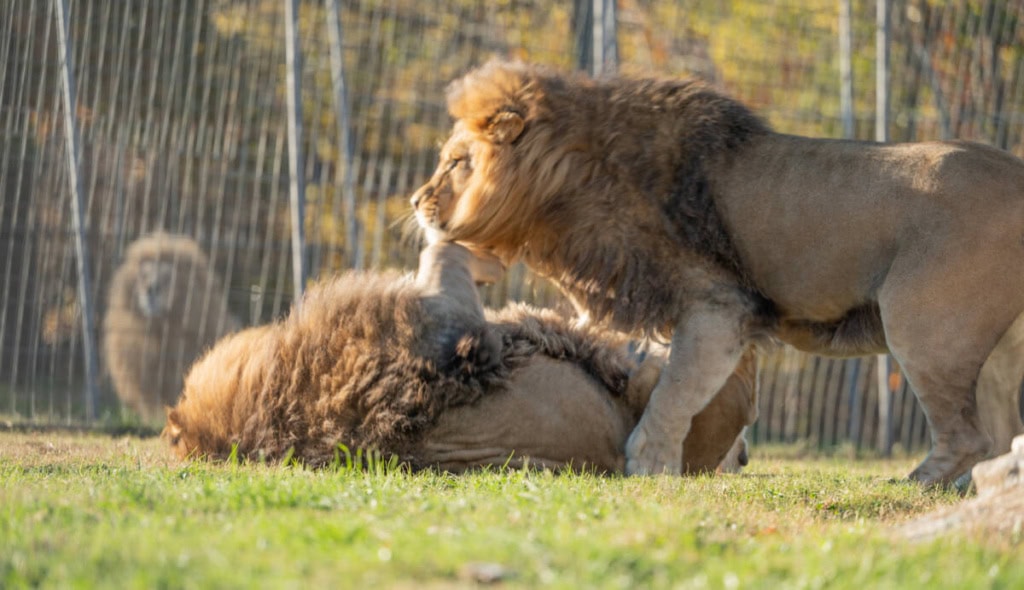
Instead of performing for crowds, they decide when to explore.
Instead of posing for photographs, they choose when to nap beneath the trees.
Instead of living in small cages, they roam large natural habitats designed to encourage species-appropriate behaviors like scent investigation, climbing, scratching, exploring, and resting in the shade.
Our goal is never to make lions dependent on people.
It is to give them the closest life possible to what nature intended—within the limits of captivity.
Why Lions Still Need Wild Places
Every lion living in a sanctuary represents a conservation failure somewhere else.
Sanctuaries provide a critical safety net, but they are not the solution to lion conservation.
The future of lions depends on protecting wild habitat, reducing human-wildlife conflict, combating illegal wildlife trade, supporting science-based conservation programs, and ending the commercial breeding practices that continue to produce lions who will never know life in the wild.
The greatest gift we can give future generations is not more captive lions.
It is thriving wild populations living where they belong.
What World Lion Day Means Here
World Lion Day carries a different meaning at a sanctuary.
We celebrate the resilience of every rescued lion who has overcome neglect, exploitation, or abuse.
We honor the dedicated caregivers who provide expert care every day.
And we remember that our ultimate goal is not to fill sanctuaries with lions.
It is to help create a world where fewer sanctuaries are needed.
Every rescued lion reminds us why prevention matters just as much as rescue.
Because the best place for a lion has always been—and will always be—the wild.
How You Can Help
This World Lion Day, celebrate lions by choosing experiences that protect them—not exploit them. Visit accredited sanctuaries, support organizations working to conserve wild habitats, and learn to recognize the difference between true rescue and facilities that breed wildlife for profit.
Together, we can ensure that future generations know lions not only through stories—but as thriving ambassadors of the wild where they truly belong.