
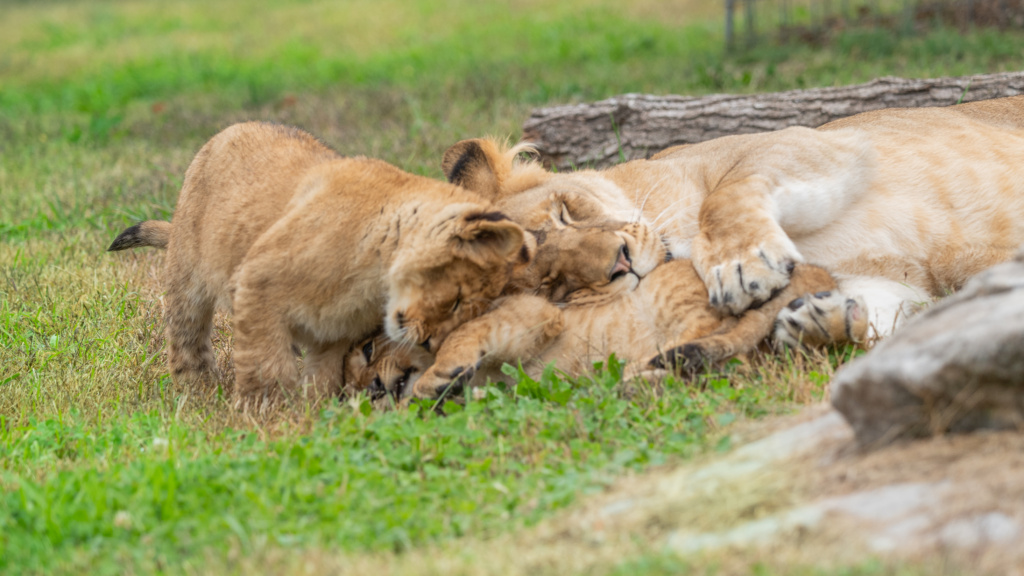
Lion development is one of the most dramatic transformations in the animal kingdom — a journey from blind, helpless newborns to confident, roaring adolescents pushing their boundaries and discovering their place in the pride. At Turpentine Creek Wildlife Refuge (TCWR), we have the rare privilege of watching this natural progression unfold for Reggie and Archie, the sons of young lioness Nirvana.
Their growth isn’t just a biological timeline — it’s a living illustration of why sanctuary matters.
Birth, Seclusion, and a Mother’s First Instincts
In the wild, a lioness leaves her pride to give birth in secrecy. Hidden deep in brush or tucked into a den, she protects her newborns from predators and even other lions. She stays secluded for 4–6 weeks, nursing her cubs and keeping them safe until they are strong enough to rejoin the pride.
Nirvana followed this instinct perfectly.
At just three years old — still a teenager by lion standards — she was sent to the Toronto Zoo to deliver her cubs in quiet seclusion. Once stable, she and her boys were able to transfer to TCWR, where they now have the safety, space, and security to live the way lion families are meant to live.
Here at the Refuge, Nirvana has everything a first-time mother needs:
- a protected, expansive habitat,
- predictable meals,
- weekly enrichment changes, and
- a care team that monitors her nutrition, weight, behavior, and postpartum health.
Her maternal instincts are extraordinary — alert, patient, and deeply bonded to her cubs. And with humans taking on the role of provider—not intruder—she can focus entirely on raising her boys.
Developmental Milestones: From Helpless to Hardy
Lion cubs grow fast — breathtakingly fast. Here’s how Reggie and Archie’s journey mirrors natural development:
Newborns (0–2 weeks)
-
- Blind, ears folded, fully dependent
- Guided only by smell and touch
- Rely on mother’s warmth and milk
2–4 weeks
-
- Eyes open
- Begin walking (wobbly but determined)
- Start exploring their den
2–3 months
-
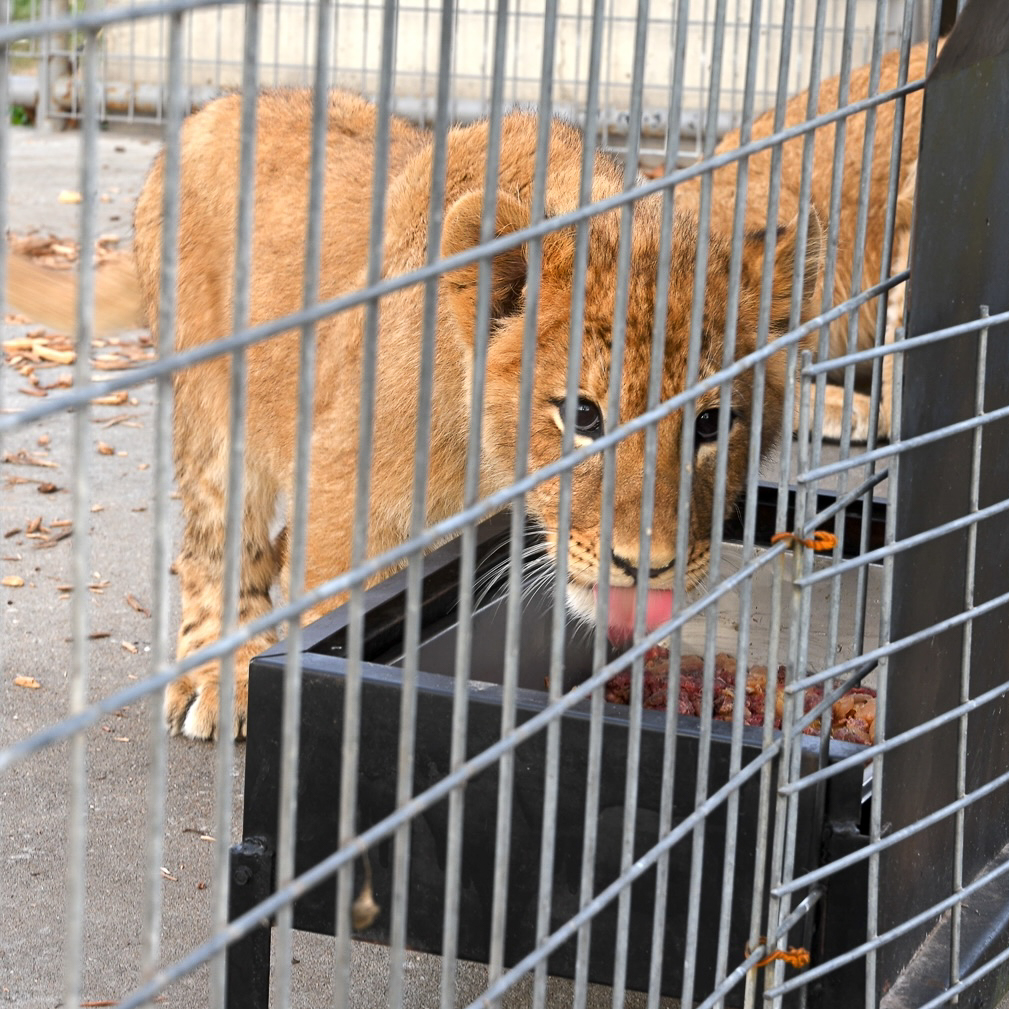
- Play-fighting begins: pouncing, swatting, chasing
- Coordination improves daily
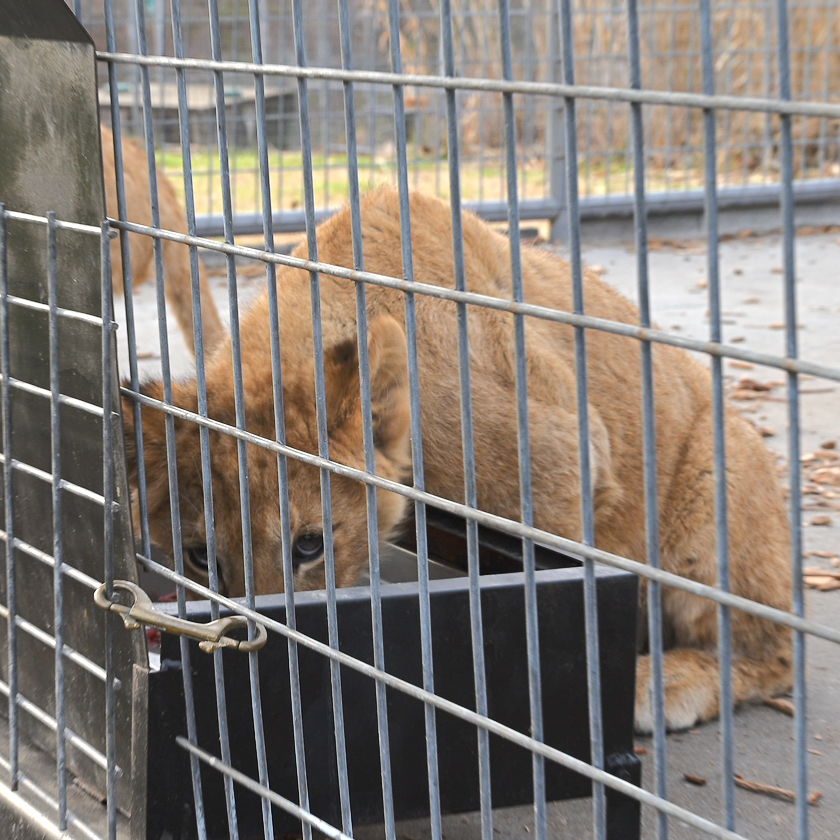
- Begin tasting meat
6 months
-
- Fully mobile, confident, shadowing mom
- First attempts at “helping” on hunts (in the wild)
1 year
-
- Roughly the size of a small leopard
- Adventurous but still dependent
- More structured play, more defined personalities
2 years
-
- Males begin developing small manes
- Reach near-adult size
- Start showing sparks of independence
These early months are critical — and they’re exactly when cubs rescued from neglect often fall behind developmentally. But Reggie and Archie are right on track because sanctuary gives them what exploitation never could: space, safety, nutrition, medical care, and their mother.
Adolescent Behavior: Testing Boundaries, Finding Courage
Adolescence in lions spans 1–4 years — the phase where cubs become characters.
During this time they:
- Test authority, challenging mom or aunties to understand hierarchy
- Engage in intense play-fighting, building muscle and learning hunting tactics
- Practice territorial behavior with scent-marking and experimental roars
- Gain the confidence to eventually leave or integrate into pride structure
- For males, manes thicken, and roars deepen, signaling maturity
It’s loud. It’s chaotic. It’s essential.
Reggie and Archie have just begun these stages — wrestling, stalking, tackling, and learning their world through instinct-driven play. Every pounce teaches balance, every chase teaches cooperation, every tumble teaches boundaries.
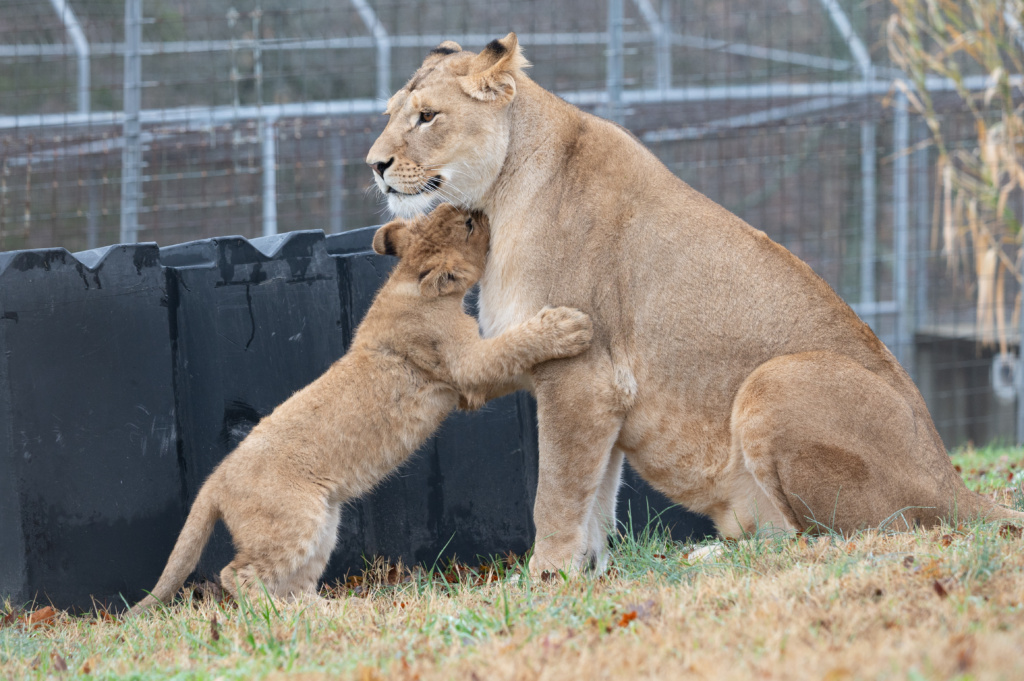
Reggie tests Nirvana’s boundaries for play and attention, but she is not in the mood.
Medical Benchmarks: How We Ensure Healthy Growth
TCWR’s experienced animnal care team, let by Curator Emily McCormack and Veterinarian Dr. Kellyn Sweeley,, tracks each stage of the cubs’ development through:
- Weight monitoring to ensure steady growth
- Teething checks, from the loss of milk teeth to full adult dentition
- Vaccination schedules and parasite management
- Muscle and body-condition scoring
- Behavioral assessments, ensuring proper social learning
- Hormonal indicators, including early mane development for males
Because TCWR provides lifelong care, these early benchmarks ensure the boys grow into healthy, confident adults with the mobility, strength, and behavioral stability they need for a full life.
Growing Up Lion: What They Learn from Mom
Even though Nirvana was young when she gave birth, she demonstrates textbook lioness behavior:
- Gentle discipline, teaching boundaries
- Nursing and grooming, which strengthen bonding
- Leading exploratory walks, building environmental awareness
- Responding to cub vocalizations, reinforcing communication skills
In the wild, cubs rely on their mother (and other females) for 2–3 years, learning everything from hunting technique to pride etiquette. Here, Nirvana plays that same role — but with far fewer dangers and far more support.
Though housed separately for safety, the nearness of the male lions — Thos, Mufasa, and Scar — provides a natural social environment: their vocalizations, scent-marking, and territorial behavior give the cubs the “pride soundtrack” that shapes lion identity.
Why This Matters — and Why YOU Matter
Reggie and Archie’s healthy development isn’t luck.
It’s not guaranteed.
And it certainly wasn’t the life they were born into.
Their transformation is possible because donors make sanctuary possible.
Your support ensures:
- mothers like Nirvana can raise their cubs without fear,
- young lions receive gold-standard nutrition and veterinary care,
- habitats provide space to run, climb, stalk, explore,
- and every rescued animal is promised a lifetime of safety, dignity, and choice.
From milk teeth to mighty roars, your generosity makes every milestone possible.