The exotic pet trade is a devastating global industry that drives biodiversity loss, fuels animal suffering, and disrupts ecosystems. At the heart of this crisis are wild cats—like African servals, tigers, and caracals—who are trafficked for profit and novelty, with little regard for their welfare or the environmental consequences.
In their native habitats, demand for exotic cats as pets or for their body parts (skins, bones, etc.) contributes to illegal poaching and habitat loss. This not only reduces wild populations but also destabilizes ecosystems. For example, removing servals from the wild eliminates a natural predator that helps control rodent populations—potentially leading to crop damage and imbalances in the food chain.
The damage doesn’t stop at borders. In the U.S., exotic cats bred or sold through the pet trade often endure extreme neglect, malnutrition, or trauma. Some are bred for cub-petting operations and then discarded. Others escape or are released into the wild, becoming invasive species. These non-native cats compete with native wildlife for food and territory and may introduce novel diseases.
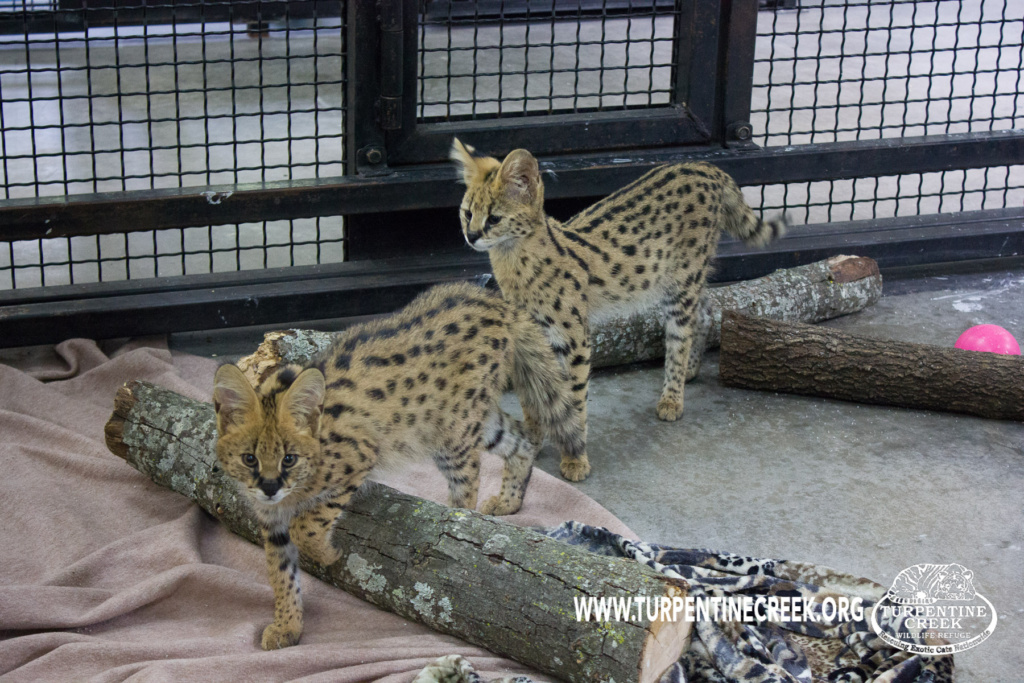
At Turpentine Creek Wildlife Refuge (TCWR), we’ve seen firsthand how the exotic pet trade scars its victims—and the environment. In July 2018, we welcomed Enzo and Sammy, two African servals rescued from a wildlife trafficking case in upstate New York. Their trafficker had imported wild servals from Africa and sold them through a website called ExoticCubs.com. Before his arrest, he had illegally trafficked 32 exotic animals.
When authorities seized the animals, Enzo and Sammy were only two months old. They arrived at our sanctuary infested with parasitic worms and suffering from Metabolic Bone Disease (MBD) due to poor nutrition. The other cats—two more servals, two caracals, and a Savannah cat—were placed with fellow accredited sanctuaries. In 2021, the trafficker was sentenced to 18 months in prison for violating the Lacey Act and the Animal Welfare Act. However, this case also reminds us that both illegal and legal wildlife trade continue to threaten animals and ecosystems.

 At TCWR, Enzo and Sammy are finally safe. Enzo has grown into a curious and expressive cat who chirps and meows at his caretakers and loves scratching trees to mark his territory. He naps on his fire hose bench or in the shade beneath his platform, comfortable in the security that only a true sanctuary can offer. Though MBD has left a permanent mark, our veterinary team manages his care with proper diet, supplements, and ongoing monitoring.
Their story illustrates both the cruelty of the exotic pet trade and the power of lifelong sanctuary to heal.
To protect wild cats and the ecosystems they belong to, we must act. That means:
- Ending private ownership of all wild cats
- Banning hybrid breeding programs
- Strengthening enforcement against illegal wildlife trade
- Raising public awareness about the suffering behind exotic pet ownership
You can help by supporting sanctuaries like Turpentine Creek Wildlife Refuge. We provide rescued wild cats with the expert care they need and a voice in the fight to end the exotic pet trade for good.