
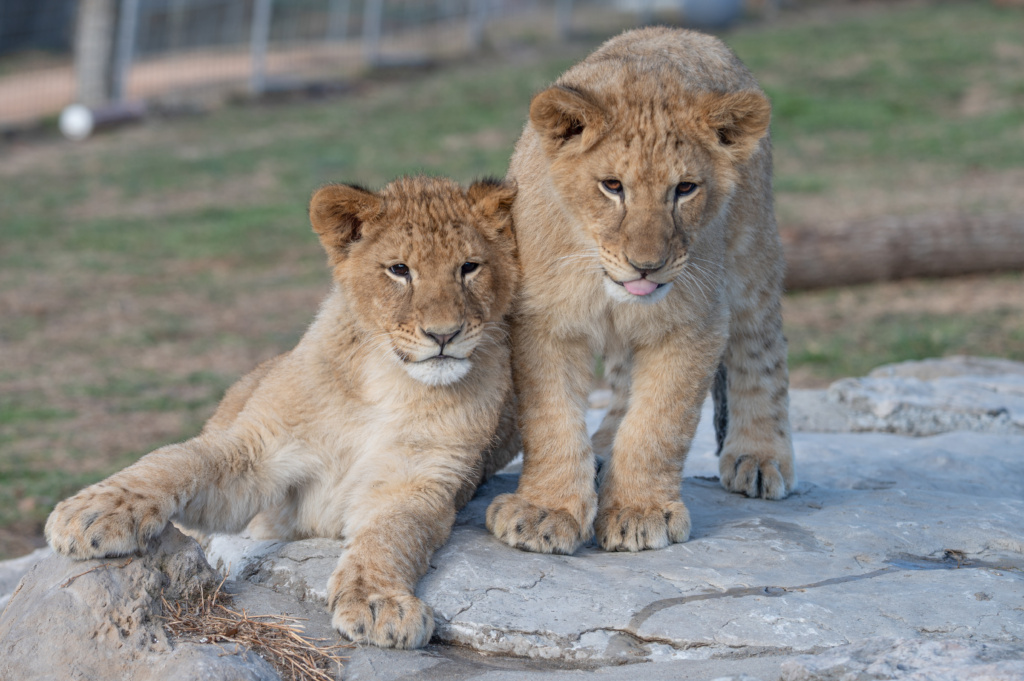
 The earliest months of a big cat’s life shape everything that follows—how they move through their environment, how they respond to stress, how they interact with others, and whether they grow into stable, confident adults or animals struggling to cope.
When people search for terms like cub petting harm, roadside zoo vs sanctuary, or big cat cubs taken from mothers, they’re often asking the same question in different ways: Does early upbringing really make that much of a difference?
It does.
What Cubs Learn Before We Ever See the Results
Big cat cubs are not born knowing how to regulate stress, communicate effectively, or navigate unfamiliar environments. These skills are learned—primarily from their mothers—during a short and irreplaceable developmental window.
Cubs allowed to remain with their mothers learn:
- How to respond to new sights, sounds, and experiences without panic
- Appropriate play and bite inhibition
- Species-specific communication and social cues
- When to explore and when to retreat
These lessons quietly shape neurological development and emotional resilience long before a cub reaches adolescence.
What Happens When Cubs Are Removed Too Soon
In roadside zoos and cub-petting operations, cubs are often separated from their mothers within days or even hours after birth, so they can be handled by the public. While this may appear harmless in the moment, its long-term effects are well-documented.
As adults, these animals are far more likely to display:
- Chronic stress behaviors such as pacing, circling, or swaying
- Heightened fear responses or misplaced aggression
- Difficulty coexisting safely with others of their species
- Poor adaptability when routines or environments change
These behaviors are not the result of temperament. They are developmental consequences.
Why Environment Alone Isn’t Enough
Providing space, food, and medical treatment later in life—while essential—cannot fully compensate for what was lost during early development. Without maternal modeling and consistent social learning, many animals never acquire the coping tools they need to function comfortably, even in improved conditions.
This is why true sanctuaries emphasize how animals are raised, not just where they end up.
The Sanctuary Difference
Cubs raised in accredited sanctuaries are given the time, structure, and support necessary to develop naturally. They are not rushed, marketed, or isolated. Instead, they grow up with:
- Consistent social relationships
- Environments that encourage exploration rather than suppression
- Predictable routines that build security
- Opportunities to express natural behaviors without coercion
The result is not perfection—but stability. And stability is the foundation of welfare.
Why This Matters Beyond One Animal
Understanding the difference between roadside zoos and true sanctuaries isn’t about assigning blame—it’s about preventing harm before it occurs.
How cubs are raised doesn’t just shape their early development.
It determines their lifelong physical health, behavioral stability, and ability to cope with the world around them.