
At first glance, leopards and jaguars can look almost identical. Both are powerful wild cats with golden coats, dark rosettes, stealthy hunting styles, and incredible strength. But despite their similarities, these two apex predators evolved on opposite sides of the world and developed very different adaptations to survive in their environments.
At Turpentine Creek Wildlife Refuge, we’re home to both species — including resident leopards Selbit and Axle, and our black jaguar, Bagheera. Their stories remind us that while these cats may look similar, each species has unique needs, behaviors, and instincts that can never be fully domesticated.
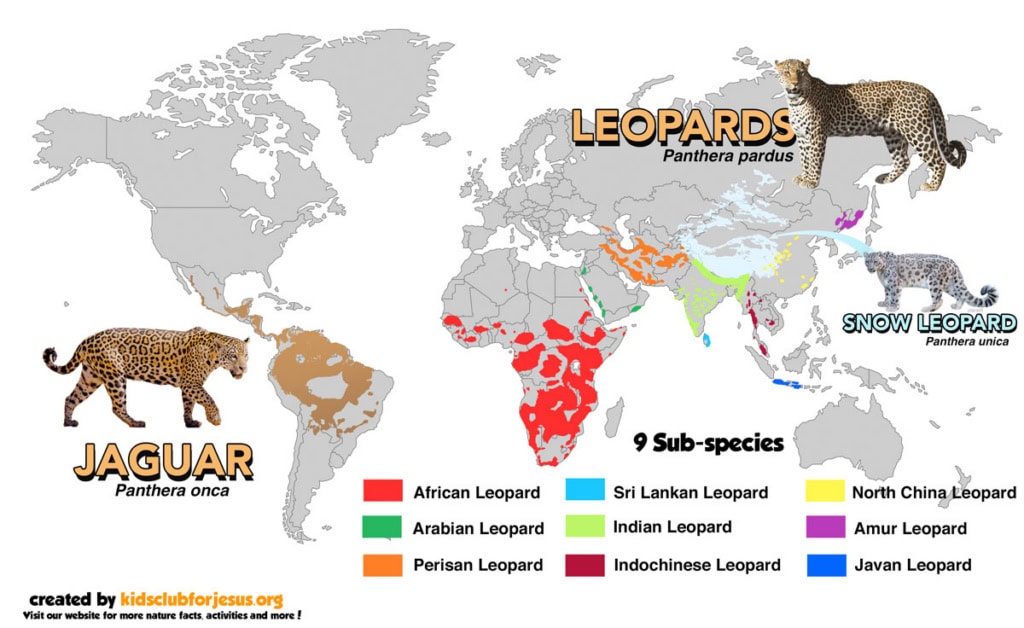
Where Jaguars and Leopards Live
One of the biggest differences between jaguars and leopards is geography.
Leopards are native to Africa and parts of Asia. They are incredibly adaptable and can survive in rainforests, savannas, mountains, and even dry desert regions. Jaguars, however, are found only in the Americas, primarily in Central and South America, with most wild populations living throughout the Amazon Basin.
Because leopards evolved in landscapes shared with lions, hyenas, and other large predators, they became agile climbers capable of carrying prey high into trees to protect their meals from scavengers. Jaguars evolved in dense forests and wetlands where they often faced less competition from other apex predators, allowing them to dominate on the ground and in the water.
Spot the Difference: Rosettes and Coat Patterns
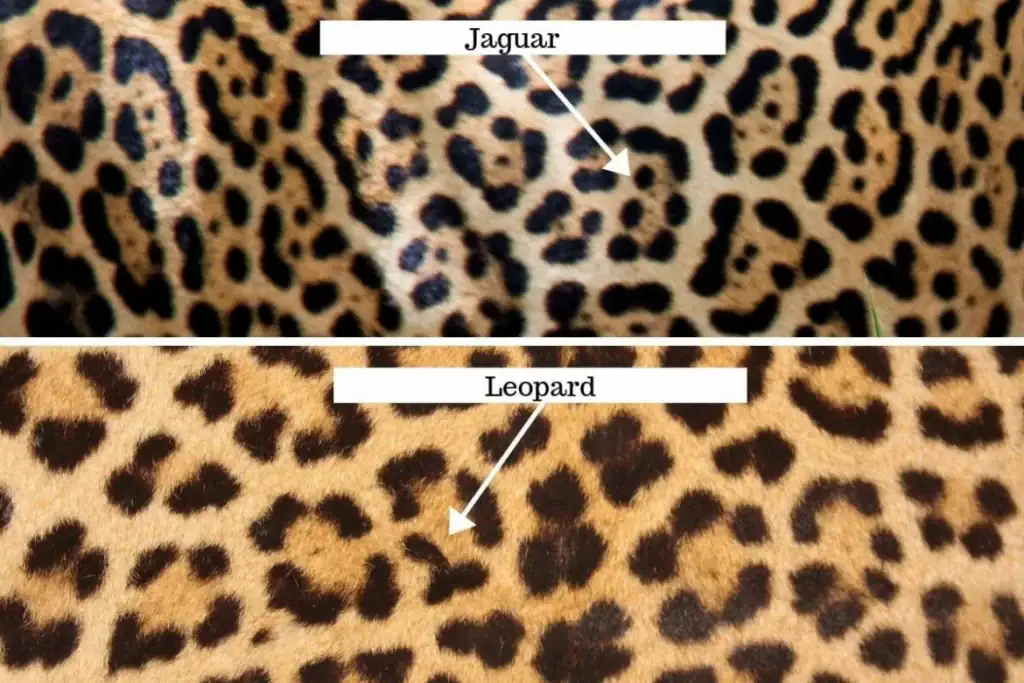
The easiest way to tell these cats apart is by their rosettes — the dark markings covering their coats.
Leopard rosettes are generally smaller, more tightly packed, and do not contain spots inside them. Jaguars, on the other hand, have larger, blockier rosettes that often feature a small black dot in the center.
These coat patterns aren’t just beautiful — they are highly specialized camouflage. In forests filled with broken sunlight and shadows, the rosettes help both cats disappear into dense vegetation while stalking prey.
Both species can also exhibit melanism, commonly called “black panther” coloration. Despite appearing solid black, melanistic cats still have visible rosettes underneath their dark fur when viewed in sunlight. This genetic trait appears more frequently in dense forest habitats where darker coloration may improve camouflage.
At TCWR, Axle is a black leopard, while Bagheera is a black jaguar. Though both appear similar at first glance, their builds, movements, and behaviors reveal the important differences between their species.
Size, Weight, and Physical Build
Jaguars are generally larger, heavier, and more muscular than leopards.
Male jaguars typically weigh between 120–250 pounds, while females average around 80–200 pounds depending on their region and habitat. Leopards are usually lighter, with males averaging 80–200 pounds and females around 60–130 pounds.
Even when similar in length, jaguars appear noticeably bulkier. They have broad chests, thick necks, massive shoulders, and shorter, sturdier legs built for explosive power. Leopards have leaner bodies, longer frames, and longer tails designed for agility and balance.
These physical differences evolved because the two species hunt very differently.
Built for Different Hunting Strategies
Jaguars are built like powerlifters.
They possess one of the strongest bite forces of any big cat, measuring around 1,500 PSI (pounds per square inch). That incredible bite strength allows them to crush turtle shells, pierce crocodilian skulls, and kill prey with a direct bite to the skull or spine.
Their prey often includes caiman, capybara, peccaries, deer, turtles, and other heavily armored or powerful animals found in wetlands and tropical forests. Jaguars are also exceptional swimmers and frequently hunt in and around water.
This compact, muscular build evolved perfectly for ambush hunting in dense jungle environments where short bursts of overwhelming force are more valuable than long pursuits.
Leopards, however, evolved for versatility and athleticism.
A leopard’s bite force averages around 300–500 PSI — still extremely powerful, but far less crushing than a jaguar’s. Instead of relying on brute force, leopards depend on stealth, agility, and adaptability.
Their slimmer bodies and long tails help them climb trees with incredible precision. Leopards are famous for hauling prey weighing more than their own bodies high into the canopy to keep meals safe from lions, hyenas, and other scavengers.
Rather than crushing skulls, leopards typically kill with a suffocating throat bite. Their lighter frame allows them to sprint, leap, climb, and adapt to a wide range of prey and environments across Africa and Asia.
Water vs. Trees
Another major difference between the two cats is how they interact with their environment.
Jaguars are excellent swimmers and often spend time in rivers, swamps, and wetlands. They are known to hunt fish, turtles, and reptiles directly in the water.
Leopards, while capable swimmers, are far more arboreal. Trees provide safety, shade, observation points, and secure food storage. Their long tails and lean frames make them some of the best climbers among big cats.
Watching Bagheera move through his habitat compared to Selbit or Axle highlights these natural instincts. Jaguars tend to move with heavy confidence and raw power, while leopards display remarkable agility and balance.
Meet TCWR’s Resident Leopards and Jaguar
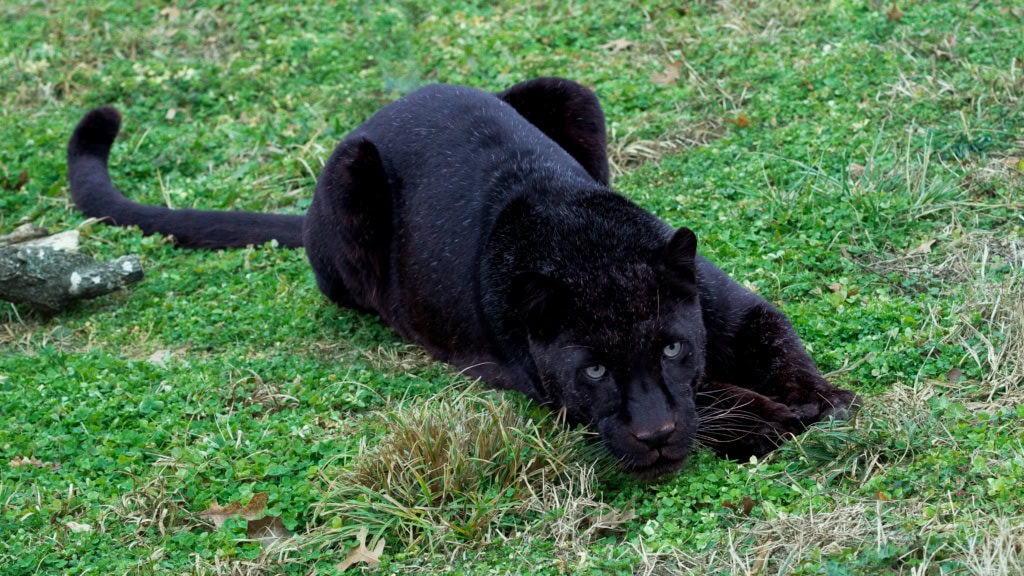
Bagheera — Black Jaguar
Bagheera was rescued by Turpentine Creek Wildlife Refuge in 2021 from the Oklahoma Tiger King Park as part of a witness-protection rescue. Before arriving at TCWR, he lived in a barren enclosure alongside larger lionesses, causing extreme stress and significant hair loss. Once given his own habitat and proper care, Bagheera began to recover both physically and behaviorally.
Today, he enjoys enrichment, confidently patrols his habitat, and is known for hoarding toys in his night house — a behavior likely shaped by years of deprivation before rescue.
Axle — Black Leopard
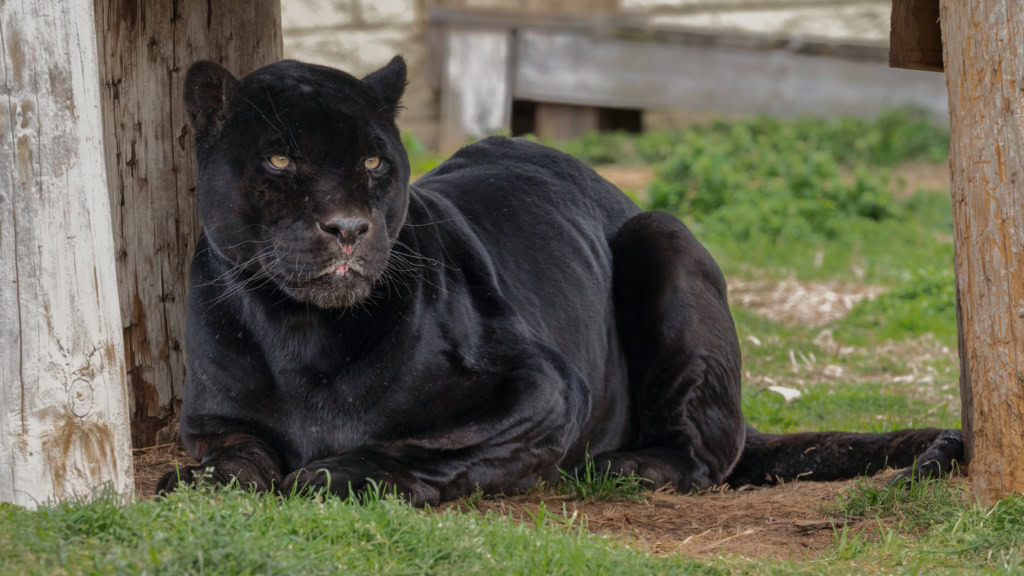
Axle arrived at TCWR as part of the California Rescue in 2025 after a facility lost its permit due to repeated welfare violations. He came with serious medical concerns, including kidney disease and a heart murmur, and now receives specialized lifelong care from the TCWR animal care and veterinary teams.
As a melanistic leopard, Axle’s beautiful rosettes can still be seen beneath his dark coat in the sunlight.

Selbit — Leopard
Selbit represents the incredible athleticism and stealth leopards are known for in the wild. Like all exotic cats at TCWR, he serves as an ambassador for why wild animals belong in protected habitats — not private ownership or exploitative facilities.
Why These Differences Matter
Jaguars and leopards may look alike, but their bodies, behaviors, and instincts were shaped by entirely different ecosystems over millions of years. Their specialized adaptations make them extraordinary survivors in the wild — but they also make them completely unsuitable as pets.
No matter how young they are raised or how calm they may appear, these animals remain apex predators with complex physical, behavioral, and psychological needs.
At Turpentine Creek Wildlife Refuge, we provide lifelong sanctuary for rescued exotic cats while educating the public about the dangers of the exotic animal trade and private ownership. Every resident, from Bagheera to Axle to Selbit, helps tell that story.