
Rescue Videos
Watch the TCWR team in action while rescuing animals from private owners, roadside zoos, and situations of abuse and neglect.
After more than 18 months of careful planning, Turpentine Creek Wildlife Refuge (TCWR) completed a historic international rescue to bring three African lions to their forever home. In January 2026, the Refuge helped relocate eight big cats from Honduras to accredited sanctuaries in the United States—the first time large felines were permanently and legally transferred from Honduras under full CITES permitting and international wildlife transport regulations.
Behind the scenes, TCWR worked quietly with government agencies, international regulators, veterinarians, and sanctuary partners to ensure every step of the rescue met strict legal and welfare standards. The goal was simple but critical: make sure each animal could safely reach a sanctuary prepared to provide lifelong care.
The rescue involved eight big cats. TCWR committed to providing permanent sanctuary for three lions—Cyrus, Juancito, and Zephorah—while a trusted GFAS-accredited partner sanctuary welcomed the five tigers. Because TCWR’s habitats would reach capacity with the lions’ arrival, this collaboration ensured that every animal would have the space, medical care, and resources needed to thrive.
Vice President Scott Smith traveled to Honduras months before the rescue to oversee the construction of specialized transport crates built to meet international air-freight standards. Once export permits were finally approved, TCWR’s team arrived in Honduras on January 10, 2026. Under veterinary supervision from Dr. Kellyn and with Curator Emily McCormack assisting, the cats were safely anesthetized and loaded into their crates during heavy rain.
The journey that followed required precise coordination. The animals were transported by boat from Roatán to the Honduran mainland—crossing in just four hours to stay ahead of an approaching storm—before traveling by land to the airport. From there, they flew to Miami aboard a cargo flight.
President and Founder Tanya Smith then joined the transport team to escort the cats more than 1,250 miles by road to Arkansas. From departure on January 12 to their arrival shortly after noon on January 15, the journey spanned nearly 60 hours.
Today, Cyrus, Juancito, and Zephorah are settling into spacious habitats designed for lifelong sanctuary care. Their story reflects the dedication, collaboration, and perseverance required to give rescued wildlife the second chance they deserve.
For months, Turpentine Creek Wildlife Refuge worked quietly behind the scenes to prepare for one of the most complex rescues in our history. Beginning in winter 2024, our team coordinated with international partners and government agencies, hoping the opportunity would come to help lions in need.
In May 2025, that call arrived.
Humane World Canada had seized seven African lions from a closed roadside facility in Quebec, a place long plagued by neglect and inbreeding. To facilitate their rescue before the next winter and in consideration of limited sanctuary resources available for exotic captive wild animals in Canada, an international partnership quickly formed. Turpentine Creek Wildlife Refuge joined forces with Humane World Canada, Aspen Valley Wildlife Sanctuary in Ontario, and The Wildcat Sanctuary in Minnesota to give these lions a second chance at life.
Phase I: A Safe Place to Wait
The first step was moving the lions to safety. Turpentine Creek’s team helped transport all seven lions more than 455 miles across Canada to Aspen Valley Wildlife Sanctuary. Though Aspen Valley typically specializes in native Canadian wildlife, their team built temporary enclosures so the lions could stay safe while international permits were processed.
Shortly after arriving, one lioness—Nirvana—was transferred to the Toronto Zoo when it became clear she was pregnant. Following the heartbreaking loss of another pregnant lioness from the original facility, every precaution was taken to ensure Nirvana and her cubs received the best possible care.
Phase II: A Journey to Forever Homes
Months of permits, planning, and coordination followed. In October 2025, Turpentine Creek’s rescue team completed the final leg of the journey, transporting Scar, Mufasa, Thor, Nirvana, and her two cubs nearly 1,500 miles to Arkansas.
Today, the lions are thriving in spacious habitats at the Refuge.
Scar and Mufasa remain inseparable brothers, often lounging side by side or tumbling down their hillside together. Thor, a striking white lion who had been moved from facility to facility for much of his life, is finally experiencing the stability of a permanent home. And Nirvana—calm, attentive, and resilient—can often be seen guiding her cubs Archie and Reggie as they explore their world with curiosity and playful energy.
Thanks to the dedication of multiple sanctuaries across two countries, this pride now has what every rescued animal deserves: safety, dignity, and lifelong care.
A New Chapter: Sebastian & Shakira Find a Forever Home
In October 2025, Turpentine Creek Wildlife Refuge welcomed two remarkable tigers, Sebastian and Shakira, to their new forever home in the Ozark Mountains. Their arrival followed the difficult closure of Crown Ridge Tiger Sanctuary in Missouri, a fellow Global Federation of Animal Sanctuaries–accredited facility. When Crown Ridge announced it would close, Turpentine Creek stepped in to ensure the tigers would continue receiving the highest standard of care.
For Shakira, the move marked a powerful reunion years in the making.
Born on April 9, 2010, Shakira began life at Joe Exotic’s facility before being transferred to a small roadside zoo. Life there was stressful, and tension between Shakira and her sister, Jasmine Magnolia, eventually led to Jasmine’s rescue by Turpentine Creek. When the roadside zoo later closed, Crown Ridge provided Shakira with a safe place to live and receive care for digestive issues related to metabolic bone disease from her early years.
Now, more than a decade later, the sisters are together again. At Turpentine Creek, Shakira lives near Jasmine Magnolia at Rescue Ridge, where they can see and hear each other from neighboring habitats. Shakira has settled in beautifully—stretching in the sun, chuffing softly, and charming the animal care team with her personality and her fondness for what staff jokingly call “old-lady perfume.”
Sebastian’s story also comes full circle with his return to Turpentine Creek.
Originally rescued from Tiger King Park in Thackerville, Oklahoma, in May 2021, Sebastian was placed at Crown Ridge through the Big Cat Sanctuary Alliance because Turpentine Creek’s habitats were full at the time. His mate, Priscilla—who was relocated to Turpentine Creek—gave birth shortly after to triplets DOJ, Jinx, and Rosie. The cubs were born unable to walk due to severe flexural tendon contracture, but with months of dedicated therapy from the animal care team, they grew into healthy, thriving tigers.
Following Crown Ridge’s closure, Sebastian arrived at Turpentine Creek’s Freedom Field, where he enjoyed a spacious habitat with a heated den, pool, and climbing platforms. After a previous growth reappeared along his upper jaw, our veterinary team confirmed it as an aggressive oral cancer in March. At that point, our team made the compassionate decision to let him go—the last gift we could give him. At Turpentine Creek, we always place the animal’s quality of life first—no matter how hard it is to say goodbye.
In May 2025, Turpentine Creek Wildlife Refuge answered an urgent call for help from California. After a facility lost its permit due to repeated animal welfare violations, eight exotic cats were suddenly left without a safe future. Working alongside the USDA and the California Department of Fish and Wildlife, TCWR stepped in to ensure these animals would never face neglect again.
The rescue brought eight wild cats to sanctuary: three female African lions, one male lion, a leopard, a serval, a caracal, and a fishing cat. Many arrived with serious medical challenges caused by years of inadequate care. Several suffer from deformities associated with Metabolic Bone Disease (MBD), a painful condition linked to poor nutrition.
At the Refuge, each animal now receives individualized care designed around their unique needs.
Lucy, a playful African lion, lives with shortened, bowed legs caused by MBD, yet she approaches life with remarkable energy—running, exploring, and often providing comic relief with her curious personality. Samson, another lion affected by MBD, arrived with severe front-leg deformities. With pain management and careful veterinary support, both cats are showing improvements in mobility.
Other rescues face different challenges. Axle the leopard requires medication and a specialized diet to manage kidney disease and a heart murmur, while Zeus the caracal lives with neurological complications and past injuries likely caused by a vehicle strike. Leyah, a lioness believed to be blind and deaf, has learned to navigate her new habitat with confidence, often relaxing on her bench or playing with enrichment.
Despite their difficult pasts, these cats are resilient. Kaia the fishing cat surveys her new world from atop her den, Amari explores each new enrichment item with curiosity despite facial paralysis, and Chapman the serval—once underweight and distrustful—now greets the animal care team each morning with enthusiastic vocalizations.
Today, all eight cats live in spacious natural habitats at Turpentine Creek Wildlife Refuge. Surrounded by expert veterinary care, proper diets, and daily enrichment, they are finally free to do what every wild animal deserves: rest, explore, and simply be.
In early April 2025, Turpentine Creek Wildlife Refuge received an urgent call from officials in Nye County, Nevada. Seven tigers were living at a private facility in Pahrump, and authorities needed immediate assistance to ensure the animals’ safety. With decades of experience coordinating complex rescues, the TCWR team mobilized quickly to help.
When our staff arrived in Nevada, they worked alongside the Nye County Sheriff’s Office, local officials, and federal partners to assess the situation and begin the rescue operation. The tigers were living in cramped, unsafe conditions without reliable access to water. Their owner had claimed the animals were “emotional support animals,” despite lacking the permits required by the county and having a long history of violations.
Time was critical. After conducting brief medical checks to ensure the animals could travel safely, the TCWR team carefully loaded the seven tigers and began the journey back to Arkansas.
Within hours, the tigers were on the road to their new home.
By Friday morning, all seven had safely arrived at Turpentine Creek Wildlife Refuge’s Global Federation of Animal Sanctuaries–accredited facility in Eureka Springs. Here, they entered TCWR’s Witness Protection and Rescue Program, where animals involved in active legal cases receive specialized care while authorities complete their investigations.
Today, the seven tigers—Livia, Maggie, Mustafa, Salvador, Thelma, Louise, and Nakita—are living in spacious natural habitats designed to meet their physical and behavioral needs. Our veterinary and animal care teams monitor each animal closely, developing individualized care plans that include proper nutrition, medical treatment, and daily enrichment.
For many of these tigers, the transition has already begun to show remarkable results. With space to roam, consistent care, and the safety of a permanent sanctuary, they are gaining strength and confidence every day.
Turpentine Creek Wildlife Refuge has spent more than 30 years answering calls like this—working with law enforcement, government agencies, and animal welfare partners to rescue animals in crisis.
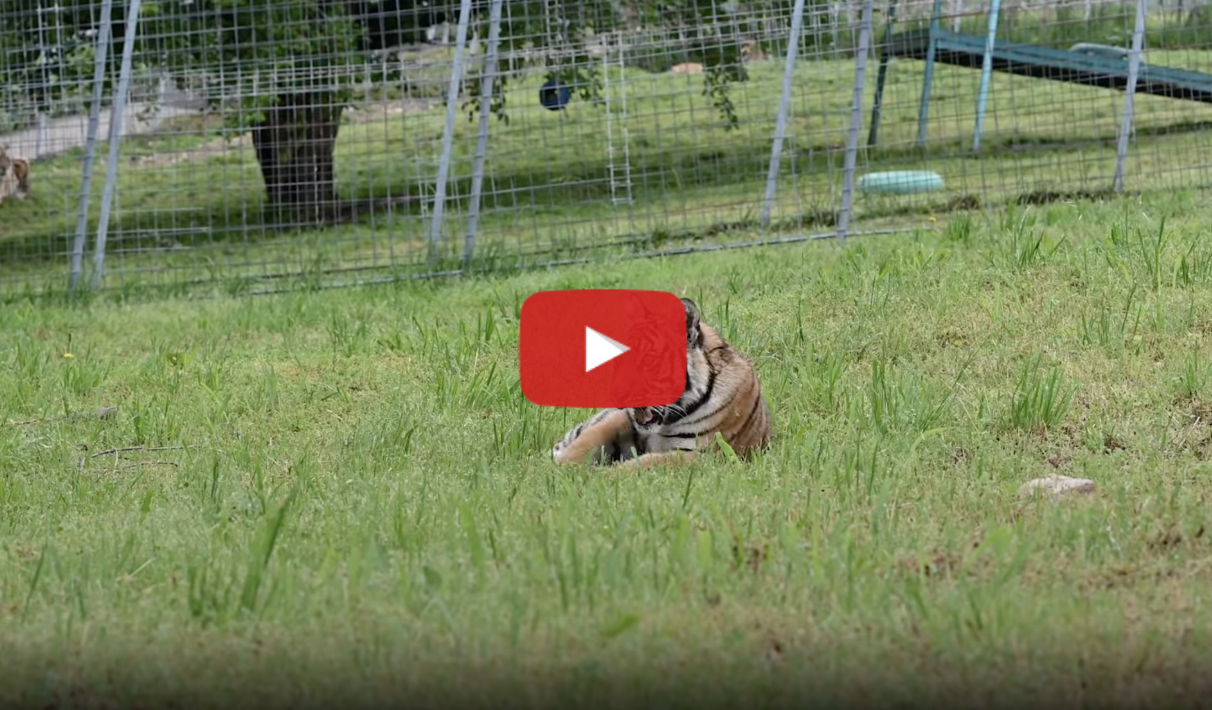
In April 2023, Turpentine Creek Wildlife Refuge (TCWR) received an urgent call from the Arkansas Game and Fish Commission about a tiger cub seized under the newly enacted Big Cat Public Safety Act (BCPSA). The young tiger, later named Fred, had endured appalling conditions. His owner, tied to the federal Operation Early Harvest case, had abused him, kept him in a tight dog harness, and fed him only rats—far from the proper nutrition a growing tiger requires.
When Fred arrived on April 4, 2023, the TCWR team immediately removed his harness and began his journey to healing. At first, he showed fear, hesitant even to touch a log in his habitat. With encouragement, Fred began exploring, splashing joyfully in his water dish and later discovering the pool in his outdoor enclosure. A veterinary exam revealed muscle weakness and parasites, but with medical care, proper diet, and enrichment, he grew stronger each day.
For nearly a year, Fred’s story remained confidential due to the ongoing investigation. In March 2024, the case concluded with 56 arrests, underscoring the urgent need for the BCPSA. “These animals are not pets,” said TCWR President Tanya Smith. “Fred was a victim of greed and ignorance, but now he is free.”
Today, Fred is thriving—playful, curious, and learning natural tiger behaviors. His rescue is a powerful reminder of why sanctuaries like TCWR exist: to provide safety, dignity, and a future for victims of the wildlife trade.
In early 2023, Turpentine Creek Wildlife Refuge reached a historic milestone when we welcomed 33 wild cats from a Global Federation of Animal Sanctuaries (GFAS) accredited facility in Florida. This sanctuary, a trusted partner and fellow member of the Big Cat Sanctuary Alliance, had collaborated with us on many rescues over the years. With the passage of the Big Cat Public Safety Act in 2022, their mission came to a close, leaving a large population of small wild cats and six tigers in need of permanent homes. To prepare for their arrival, TCWR expanded our refuge through the creation of Freedom Field, a major development made possible by the support of the Florida sanctuary and our generous donors. This expansion added 14 large habitats for big cats, 2 medium habitats, 22 small cat habitats, and 4 specialized small cat habitats with heated buildings for more exotic species. The rescue not only gave these animals a safe and forever home, but also strengthened TCWR’s ability to answer the growing need for sanctuary space in the years to come.
On September 19, 2020, after years of court litigation, a facility in Indiana was ordered by the courts to relinquish his animals. The smaller animals were rescued by the Indianapolis Zoo and the large cats were rescued by Turpentine Creek and another Colorado based sanctuary. Turpentine Creek took in eight cats – 4 lions (Chief, Mauri, Savanna, and Ungowwa) and 4 tigers (Avalanche, Hurricane, Glacier, and Miles). All of the animals were infested with intestinal parasites and had many health issues. Chief was by-far in the worst condition. This large male lion had refused to eat or drink for days before rescue. His hind legs were atrophied and he stumbled as he walked. Luckily, the team was able to get him in the transport cage and back to the Refuge quickly. All eight of the rescued animals were given a nutritious diet, dewormed, and examined upon arrival. Many were scared and aggressive but once they settled in they transformed into happy, healthy animals. Many of the cats were declawed so our team has had to put them on pain management.
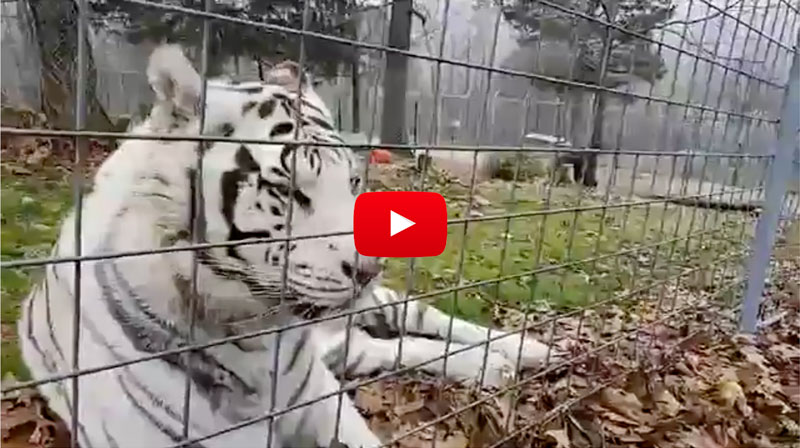
In 2016, Turpentine Creek was contacted by PETA about taking in four tigers. PETA had taken Dade City Wild Things (DCWT) to court prematurely separating tiger cubs from their mothers, forcing them into public encounters, and warehousing them in small cages that violate the federal Endangered Species Act (ESA). When in 2017, the court ordered an inspection of the facility DCWT packed up all their tigers and shipped them off to various facilities in the middle of the night. Four tigers were sent to a facility in Florida while 19 were sent to Oklahoma.
For three years, PETA fought to rescue the four tigers sent to a Florida facility and have them sent to Turpentine Creek Wildlife Refuge. Luna, Remington, Rajah, and Rory had all been victims of DCWT’s pay to play scheme. Sadly, for Rajah and Rory the court-ordered rescue came too late as a storm passed through Florida, reportedly downing a tree on their enclosure and they escaped and were subsequently killed. This escape was the final push for the court to finalize the rescue.
Luna and Remington, the two surviving tigers, came to Turpentine Creek on January 15, 2020. Four of TCWR’s team members made the 36-hour round trip to pick up these beautiful cats. A fellow Big Cat Sanctuary Alliance member, The Forest Animal Rescue, helped us load the cats in Florida to help minimize the number of team members who had to be away from our facility.
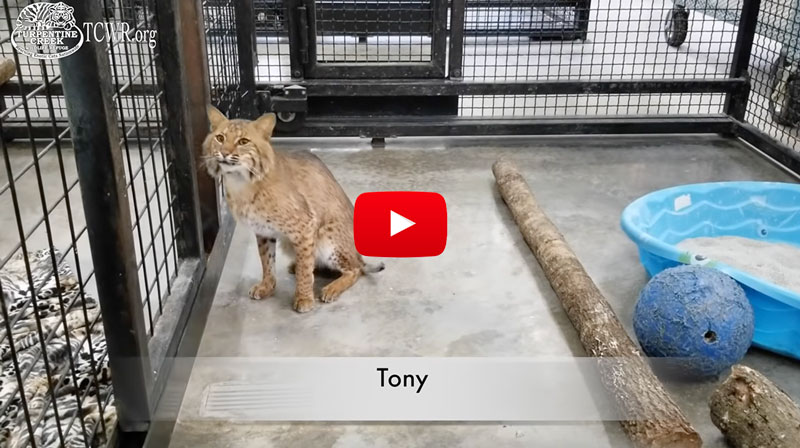
On May 28th, 2019, Turpentine Creek was contacted by a woman who had two pet bobcats given to her after they were rescued from a flooded house. Record breaking flooding of the Arkansas river had displaced many people in the surrounding area.
The two 8-month-old bobcats, Prince and Tony, had been rescued from a flooded home in Lavaca, Arkansas. They were confined to dog crate cages with rising flood waters already reaching their chests. The rescuers pulled the pair of bobcats out of the house in time to save their lives, but not all of the owner’s animals were rescued in time. The owner relinquished the bobcats to a woman in Charleston, Arkansas, who was known to take in small animals in need. Not knowing how to care for bobcats the woman reached out to local rescues to find them a home. Multiple rescues pointed her in Turpentine Creek’s direction, so she contacted Turpentine Creek for help.
Turpentine Creek answered the call and packed up to race down to rescue the bobcats. Navigating around flooded areas, what should have only been a two-hour trip took over three hours to traverse. Many roads were flooded, and most bridges had been closed down due to severe flooding. Despite this, the team took their time and safely made it to Charleston, Arkansas to pick up our newest animal residents.
According to the rescuer, the pair of bobcats had been found in the wild in October of last year and were approximately one month old. The individual who found them decided to keep them as pets and had them living in her house. When her husband became sick, they were moved to small crates in the person’s backyard and were allowed to spend some time in a dog run on occasion. Both Tony and Prince show signs of severe muscle atrophy in their hind legs due to this. They were also both reportedly being fed cat food, an improper diet for a bobcat, and also show nutritional deficiencies.
The two bobcats settled into their new home at Turpentine Creek with a little extra attention from our staff and Veterinarian.
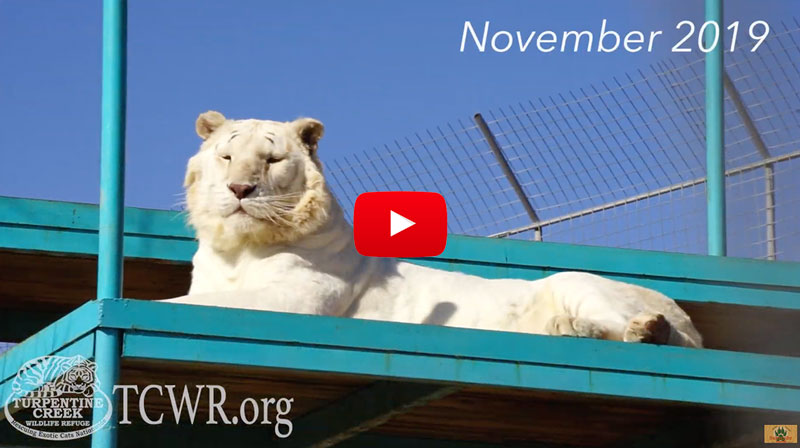
In January of 2019, rescued six tigers from a closing facility in Oklahoma. The owner of the facility had lost his lease on the property after being harassed by a group of individuals. He reached out to Turpentine Creek to take over the care of his six tigers.
All six tigers had once been part of the cub petting pay-to-play scheme and were scheduled to be euthanized after they could no longer make a profit. The owner of the facility rescued them from that fate, but since he was losing the lease on his land, he needed to find them a new home. Their ages range from 16-months-old to 4-years-old.
They were located in two enclosures on the property; the youngest two, Floyd and Tigger, living in one habitat and the other four, Robbie, Frankie, Tommie, and Diesel, residing in the other. It was quickly evident that all of the tigers were overweight but one, Diesel, was seriously ill. Three of the tigers quickly loaded into their transport cages, but the other three (Robbie, Frankie, and Diesel) needed to be sedated.
It took nearly six hours to load up the six cats; Diesel was last. He was lethargic and barely moved the entire time we were rounding up his friends. Once we had him sedated, we took blood so that we could figure out what was causing his illness as quickly as possible.
Sadly, only a few days later Diesel passed from the illness. The other five tigers settled into their lives at Turpentine Creek Wildlife Refuge. A healthy diet and some enrichment encouraged exercise helped to get the remaining five tigers to a healthier weight.
In late August of 2016, Turpentine Creek Wildlife Refuge was made aware of an opportunity to possibly rescue and/or rehome 115 animals from a zoological and animal exhibitor park in Colorado. The owner, who had opened the park in 1993, could no longer be responsible for the many animals due to a cancer diagnosis, and therefore TCWR, with the help of Tigers in America (TIA), began negotiations with the zoo.
As a rescue organization, TCWR bears the ethical responsibility of protecting — within the confines of federal and state laws — the survivors of the exotic pet trade. Not only does this include animals that are living in neighborhood backyards, but also animals coming from the entertainment industry and struggling privately owned zoos. With only 12 acres housing the 115 animals, the zoo faced many spacing issues. Unfortunately, the issue with space was only exacerbated by the fact that they were breeding the animals. The zoo was breeding specifically in order to operate a financially lucrative cub petting or pay-to-play program. These programs, while monetarily enticing, have serious consequences for the animals and therefore TCWR does not condone the practice.
An important part protecting these animals lies in the educating the public about why the exotic pet trade is so harmful. Therefore, after visiting the facility and discussing purchase options with the owners and our own Board of Directors, our team developed a plan to move forward with acquiring the Colorado zoo and its assets, with the understanding that the animals would be donated to TCWR.
The former owner had been grandfathered into new laws dictating, among other things, how habitats should be built and therefore, was not upheld to the same regulations as newer zoos in Colorado, let alone to TCWR’s own safety and animal welfare standards. As the new owners, the grandfather clause did not apply to us, and because of our ethical responsibilities to the welfare of the animals, it became evident that we would be unable to leave the animals on the property without seriously depleting our resources in an attempt to rebuild.
6 months later, all 115 animals were successfully rehomed. TCWR brought 34 animals to Eureka Springs, Arkansas, and the remaining animals found a home at 14 other reputable sanctuaries across the nation. It has been a long process and it is not done yet, but we are thrilled to say that all of the animals are being well taken care of and are enjoying their new spacious forever homes.
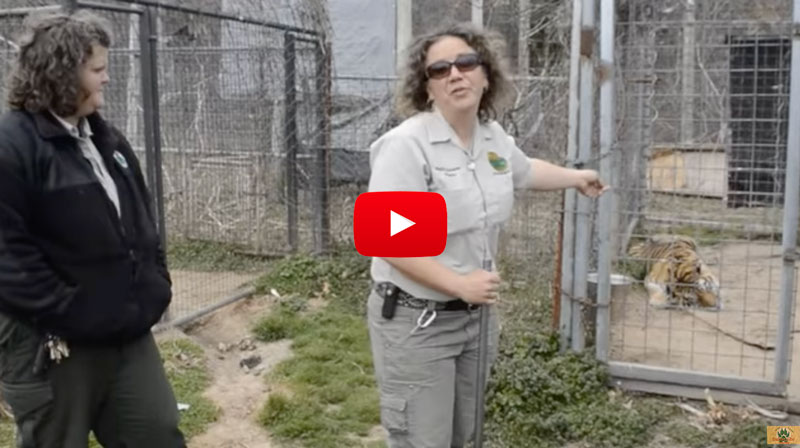
Turpentine Creek Wildlife Refuge was asked by the Crawford County Sheriff’s Office to help them peacefully orchestrate the relocation of 34 big cats. The owner was a 72-year-old with failing health. She had been hoping to be able to care for all of her cats for the remainder of their lives, but as her health began to diminish it became apparent that she would be unable to do so.
Between November 2012 and March 2013, TCWR staff made about 15 trips to the dilapidated facility to rescue 27 tigers and one cougar. Over the course of 128 days, TCWR staff built the area now known as Rescue Ridge – 20 habitats in a secluded area of the refuge, in order to accommodate all of the cats.
In December of 2009, Turpentine Creek Wildlife Refuge received an email from the Interactive Zoo and Aquarium (formerly known as Predator World) a roadside zoo in Branson West, Missouri. Facing stricter regulations for habitat enclosures, the owner of the zoo asked TCWR to assume responsibility for 9 animals: 7 big cats, a bear, and a coatimundi.
Not long after receiving the email, TCWR staff members went to the facility to form the best plan in order to move all of the animals safely. The weather played a significant role in this rescue as the location of the animals made it necessary to anesthetize them and then physically carry them to the rescue trailers –if the weather had been too warm it would not have been safe to use the sedatives. Fortunately, the weather worked in TCWR’s favor and we were able to move the animals quickly and efficiently. Upon their arrival to the Refuge, the male cats were fixed to avoid any further breeding and everyone was given a general check-up and any additional veterinary care deemed necessary was provided at this time. It did not take long for all nine of them to make themselves at home as they were quickly absorbed into the Refuge family.
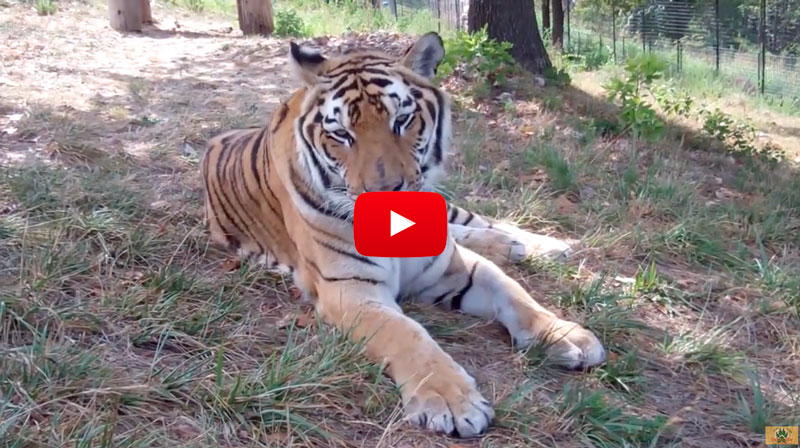
In 2002, Turpentine Creek Wildlife Refuge was called to Safari Park. The owner had lost his property a while back and had moved all of his animals to another facility with sub-standard enclosures. The owner had been breeding animals for the exotic pet market in Quitman, Arkansas.
Initially, in an attempt to lighten his burden, he asked TCWR to rescue 6 of the 66 cats on the property. After returning to TCWR with 7 tigers: Jerry, Haley, Whitney, Roulon, Tammy, and Garth, each tiger was given almost 40 lbs of meat that first night. Their food aggression made it evident that their meals had been sparse.
A few short weeks after these tigers were rescued, Turpentine Creek staff were made aware of the disturbing news of the Quitman facility. A local newspaper had reported that four lions from Safari Park had broken out of their caging and mauled a camel. All four were subsequently shot and killed by local law enforcement.
At 7:30 am the owner called and contacted our Vice President Scott Smith, asking if it was legal to shoot the remaining 56 animals in his possession because he said he was “done and could not handle it any longer”. Our team immediately jumped into action telling him we would come to relocate the animals. Upon arrival the stench was overpowering, many of the animals were living in their own refuse. We took as many animals as we could, making 6-7 trips during the rescue.
A total of 21 cats found a home at the Refuge: Jerry, Roulon, Haley, Whitney, Tammy, Garth, Tasha, TJ, Lucci, Wyoming, Livingston, JJ, Reese, Titan, CJ, Cessna, Clancy, Lana, Greg, Boris, and Thunder. The remaining cats were at Tiger Haven, a sanctuary in Tennessee.
All the Quitman cats were put on a strict regimen of vitamins, including taurine and calcium for bone development. The healthy diet, immediate medical care, and unending compassion proved to be what these cats needed, and with time the cats recovered from their neglect.
On May 14, 1996, the Boone County, Ark. Sheriff’s Department asked Turpentine Creek Wildlife Refuge to assist in what would be found to be a severe case of neglect. When TCWR staff reached the cats they found a total of ten cats. 4 of the tigers, two leopards, and a lion were crammed into a twenty-foot horse trailer. One of the tigers and a leopard were locked in the trailer’s overhead compartment. Located in the very back was a female tiger with two cubs, and in the middle with the divider left open was the lion and the other leopard. The final two tigers were found in 6×6 foot cages next to the trailer, and a cougar in a 2×4 cargo drum. The floors of all the cages were covered in excrement, and judging by the buildup of waste, the cats had been in these small units for an estimated three weeks.
Starvation was painfully evident, with all of the cats dangerously thin. Tragically, one of the leopards, Freckles, had died of starvation just hours before TCWR’s arrival. On his side was a spot of skin where the fur had been licked away. Presumably, Toby, the lion, was attempting to revive Freckles by licking him.
In December of 1991, Twiss, a notorious breeder and black market dealer showed up on the Jackson’s doorstep with three cattle trailers full of big cats and other animals – 42 in all. She was on the run from the law and knew she couldn’t get very far with such a heavy load. She was desperate to find a place for the cats and knew the Jackson’s could are for them. At that time, Don and Hilda were living in Hope, AR, but they did know of a 460-acre ranch located in Eureka Springs. The ranch was owned at that time by a friend of the Jacksons’ who had offered it to be used as a temporary refuge.
Eventually, Turpentine Creek would officially take over the Eureka property and continue to offer Refuge to all big cats in need of rescue.