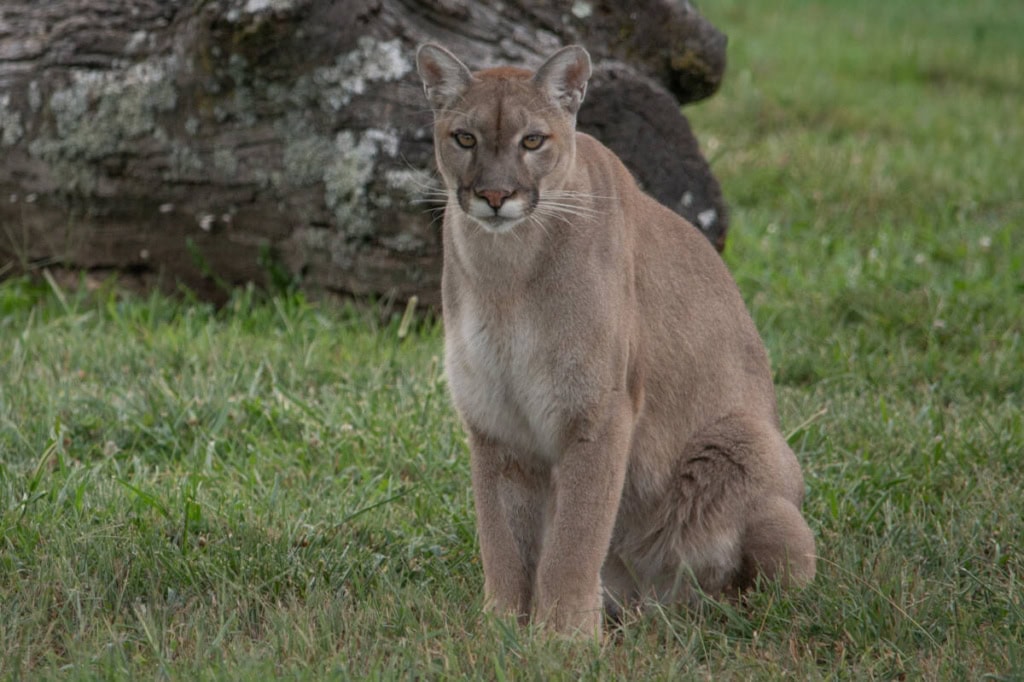
Is a panther a cougar? The answer can be yes—but it depends on how the word “panther” is being used.
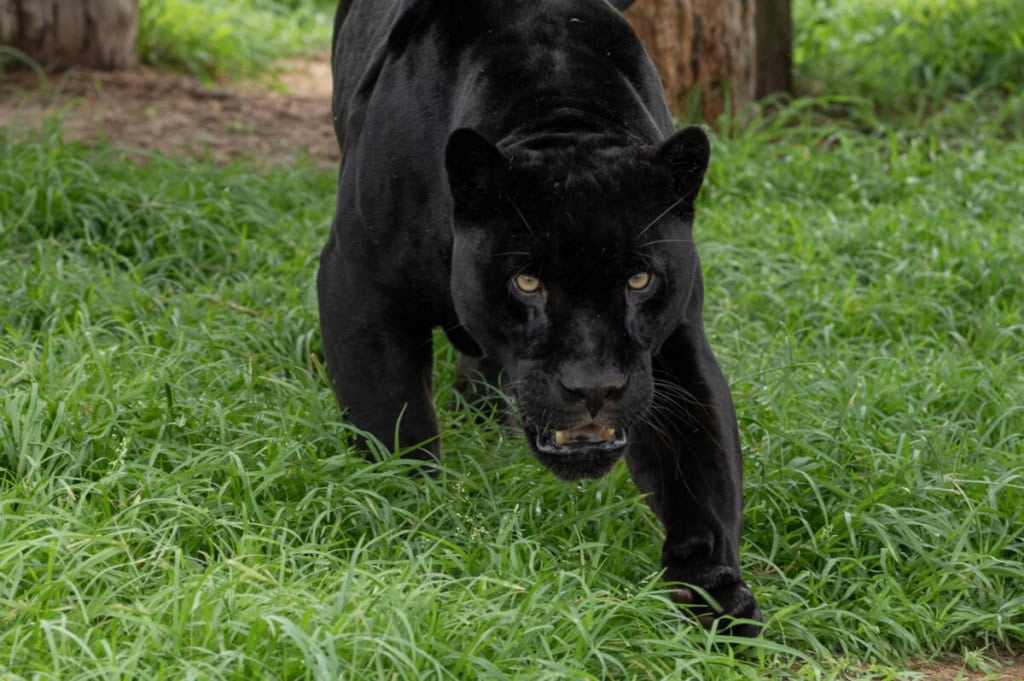
In our article, “Unveiling the Myth: Black Panthers Revealed as Mystical Melanistic Leopards and Jaguars,” we explored why “black panther” does not identify a separate species. Instead, the name commonly describes a leopard or jaguar with a dark coat. But “panther” is also a regional name for a cougar, creating understandable confusion about which animal someone means.
At Turpentine Creek Wildlife Refuge (TCWR), helping people understand wild cats is part of our educational mission. Scientific names offer a useful way to look beyond familiar labels and understand the animals themselves.
One Species, Many Names
Cougar, mountain lion, puma, and catamount are common names for the same species: Puma concolor. According to the U.S. Fish and Wildlife Service’s cougar profile, that animal is also known as a panther or painter in the southern Appalachians. These names reflect regional language and history rather than differences between species.
A mountain lion is not a separate species from a cougar, and calling either animal a panther does not change its scientific identity.
Scientific nomenclature—the system scientists use to name organisms—provides a consistent reference across languages and locations. Each species has a two-part name: the genus, which begins with a capital letter, and the specific epithet, which is lowercase. Together, the italicized words identify the species.
For the cougar, that name is Puma concolor. The word “panther” is a common name; it is not the cougar’s scientific genus.
Panther and Panthera Are Different Terms
Much of the confusion comes from the similarity between “panther” and Panthera.
As shown in the IUCN SSC Cat Specialist Group’s classification of living cats, Panthera is a scientific genus that includes lions, tigers, leopards, jaguars, and snow leopards. Cougars belong to the genus Puma.
Both groups are members of the cat family, Felidae, but they occupy different branches of that family. The American Society of Mammalogists’ Mammal Diversity Database places the cougar in the subfamily Felinae, while Panthera belongs to Pantherinae.
These names help distinguish the animals commonly involved in the discussion:
| Common name | Scientific name | Meaning |
|---|---|---|
| Cougar, mountain lion, or puma | Puma concolor | Different common names for one species |
| Panther, when referring to a cougar | Puma concolor | A regional common name |
| Black panther, when referring to a leopard | Panthera pardus | A melanistic leopard |
| Black panther, when referring to a jaguar | Panthera onca | A melanistic jaguar |
A cougar can therefore be called a panther without belonging to Panthera. The everyday name and the scientific classification serve different purposes.
Where Does the Florida Panther Fit?
The Florida panther is a cougar, too.
The U.S. Fish and Wildlife Service identifies the Florida panther as Puma concolor coryi. In that three-part name, Puma concolor identifies the species, while coryi identifies the subspecies recognized by the agency.
Subspecies classifications can change as genetic research develops. The IUCN SSC Cat Specialist Group’s puma profile, for example, discusses a broader classification that tentatively recognizes two subspecies. Regardless of those differences, the central relationship remains: Florida panthers belong to the cougar species.
Despite their name, Florida panthers are tawny-colored cats, as described by the Florida Fish and Wildlife Conservation Commission. They are not the dark-coated leopards or jaguars commonly described as black panthers.
Can a Cougar Be a Black Panther?
Although “panther” can mean cougar, that does not mean a black panther is a black cougar.
Melanism is a genetic variation associated with increased dark pigmentation. In leopards and jaguars, it produces the dark coats discussed in our earlier article. Their markings remain present and may become visible in certain lighting. Coat color does not change their species: a black leopard remains Panthera pardus, and a black jaguar remains Panthera onca.
By comparison, cougars are not known to exhibit melanism. The wild cat conservation organization Panthera addresses this distinction in its puma profile, explaining that the black coloration documented in leopards and jaguars is not known in pumas.

Understanding the Animal Behind the Name
The relationship between panthers and cougars shows why context matters. “Cougar” identifies one species. “Panther” can refer to that same species or, in other usage, to a leopard or jaguar. Scientific names make those distinctions clear.
At TCWR, education helps visitors move beyond myths and appreciate each animal’s identity, natural behaviors, and individual care needs. A familiar nickname or striking coat can capture our attention, but understanding the animal behind it builds a more informed respect for wildlife.
Whether called a cougar, mountain lion, or panther, every wild cat deserves appropriate care, protection, and the opportunity to express its natural behaviors.